Best Level 2 EV Charger for Home: Top Picks, Buying Guide, and Expert Recommendations
Published: 22 Sep 2026
Buying the best Level 2 EV charger for home is one of the most important decisions you’ll make as an electric vehicle owner. While every Level 2 charger delivers faster charging than a standard Level 1 charger, they differ significantly in charging speed, smart features, installation options, weather resistance, and long-term reliability. Choosing the right model can make daily charging more convenient, help prepare your home for future EVs, and provide a better overall ownership experience.
A Level 2 charger operates on a 240-volt circuit, allowing most electric vehicles to recover dozens of miles of driving range per hour instead of relying on the slower charging provided by a standard household outlet. Whether you drive a Tesla, Ford Mustang Mach-E, Hyundai Ioniq 5, Kia EV6, Rivian, Chevrolet Equinox EV, or another modern EV, selecting the right home charger depends on more than just maximum power output. Connector compatibility, smart charging capabilities, installation type, weather protection, warranty coverage, and safety certifications all play an important role in finding the best solution for your home.
If you’re still deciding whether upgrading from a standard household outlet is worthwhile, our Level 1 vs. Level 2 EV Charging guide explains the key differences in charging speed, convenience, and everyday usability before you invest in new equipment.
In this guide, we’ll help you find the best Level 2 EV charger for home by comparing top-rated options across different categories, including the best overall charger, the best budget choice, the best smart charger, the best option for Tesla owners, and chargers designed for outdoor installation. We’ll also explain the most important buying factors—such as charging power, connector type, installation method, smart features, and durability—so you can confidently choose a charger that fits your vehicle, your home, and your charging habits. By the end of this article, you’ll have a clear understanding of what is the best Level 2 EV charger for home and which model offers the best value for your specific needs.
What Is a Level 2 EV Charger?
A Level 2 EV charger is a home charging station that uses a 240-volt electrical circuit to charge an electric vehicle much faster than a standard household outlet. It is the most practical charging solution for homeowners because it can fully recharge most EVs overnight, making it ideal for daily driving without relying on public charging stations.
Unlike a Level 1 charger, which plugs into a standard 120-volt outlet and typically adds only a few miles of driving range per hour, a Level 2 charger delivers significantly more power. Depending on the charger’s amperage and your vehicle’s onboard charger, most Level 2 units add approximately 20 to 50 miles of range per hour, allowing many EVs to reach a full charge while you sleep.
Quick Answer
A Level 2 EV charger is a 240-volt home charging station that provides faster charging than a standard household outlet, making it the preferred choice for most EV owners who want convenient overnight charging at home.
The charger itself doesn’t determine charging speed on its own. Several factors work together, including the charger’s maximum power output, your home’s electrical capacity, and your vehicle’s onboard charger. For example, purchasing a high-powered charger won’t necessarily reduce charging time if your EV is designed to accept a lower charging rate. That’s why choosing the right charger involves matching its capabilities with your vehicle rather than simply selecting the highest amperage available.
Most modern Level 2 chargers are available in two installation styles:
- Plug-in chargers, which connect to a compatible 240-volt outlet and are generally easier to replace or relocate.
- Hardwired chargers, which are permanently connected to your home’s electrical system and are often preferred for higher power levels, outdoor installations, or long-term durability.
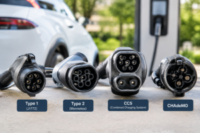
Connector compatibility is another important consideration. Most non-Tesla electric vehicles sold in North America use the J1772 connector, while many newer vehicles—including Tesla models and an increasing number of other brands—are adopting the North American Charging Standard (NACS). Some chargers include native NACS connectors, while others use J1772 and rely on an adapter for Tesla compatibility. Choosing the correct connector helps ensure a seamless charging experience today while preparing for future vehicle upgrades.
Beyond charging speed, today’s Level 2 chargers often include features such as Wi-Fi connectivity, mobile apps, scheduled charging, energy monitoring, and weather-resistant enclosures for outdoor installation. While these features aren’t essential for every homeowner, they can improve convenience and help optimize home EV charging over time.
For most households, a Level 2 charger strikes the best balance between charging performance, convenience, and long-term value. It delivers reliable overnight charging without the cost and complexity of commercial fast-charging equipment, making it the standard recommendation for drivers who regularly charge their EV at home.
Table of Contents
Why Upgrade to a Level 2 Home EV Charger?
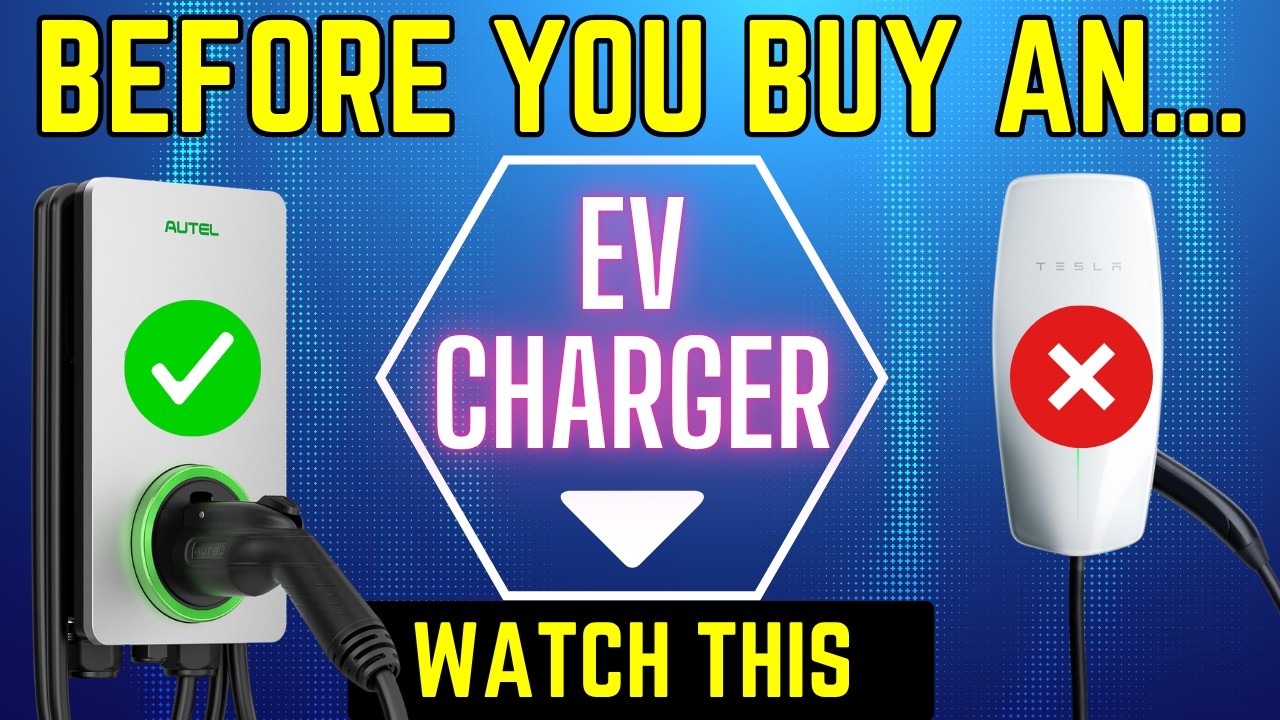
For most EV owners, upgrading to a Level 2 home EV charger is less about charging faster for the sake of speed and more about making electric vehicle ownership simpler and more convenient. Instead of planning your schedule around long charging sessions, a Level 2 charger allows you to recharge your vehicle overnight and start each day with a battery that’s ready for your typical driving needs.
Much Faster Charging Than a Standard Outlet
The biggest advantage of a Level 2 charger is its significantly higher charging speed. While a Level 1 charger connected to a standard 120-volt outlet usually adds only a few miles of range per hour, a Level 2 charger can add 20 to 50 miles of range per hour, depending on your vehicle and charger.
For drivers with longer daily commutes or larger battery packs, this difference can mean the gap between waiting more than a day for a full charge and waking up to a fully charged vehicle every morning.
Greater Convenience for Everyday Driving
Charging at home is most convenient when it fits naturally into your daily routine. With a Level 2 charger, you simply plug in after arriving home and unplug before leaving the next day. There’s no need to search for public charging stations or leave your vehicle connected for extended periods just to recover enough range for your next trip.
This convenience becomes especially valuable for households with multiple drivers, unpredictable schedules, or frequent daily travel.
Better Support for Larger Battery EVs
Modern electric vehicles continue to offer longer driving ranges, but larger batteries also require more energy to recharge. A Level 2 charger is better equipped to handle these larger battery packs efficiently, making it a practical choice for current EVs and future vehicle upgrades.
Even if your current vehicle doesn’t use the charger’s maximum power, installing a capable Level 2 charger can help prepare your home for your next EV without immediately needing another charging upgrade.
Improved Energy Management
Many Level 2 chargers include smart features that help you charge more efficiently. Depending on the model, you may be able to:
- Schedule charging during off-peak electricity hours.
- Monitor charging sessions through a mobile app.
- Track energy consumption over time.
- Receive charging notifications and status updates.
- Integrate charging with other smart home energy systems.
These features won’t reduce your vehicle’s energy consumption, but they can make charging more convenient and help some homeowners take advantage of lower electricity rates where time-of-use pricing is available.
Reliable Charging at Home
Public charging networks are expanding, but home charging remains the most dependable option for everyday use. A Level 2 charger gives you consistent access to charging whenever your vehicle is parked, reducing reliance on public stations that may be occupied, out of service, or located out of your normal travel route.
For most drivers, this reliability is one of the biggest quality-of-life improvements after switching to an electric vehicle.
Potential to Increase Home Appeal
As EV adoption continues to grow, a professionally installed Level 2 charger may also make a property more attractive to future buyers who already own—or plan to own—an electric vehicle. While a home charger shouldn’t be viewed as a guaranteed investment that increases property value, it can serve as a practical feature that appeals to a growing segment of homebuyers.
Is Upgrading Worth It?
For most homeowners who regularly charge an electric vehicle at home, the answer is yes. A Level 2 charger offers faster charging, greater convenience, support for larger battery packs, and access to smart features that improve the overall charging experience. While the right charger depends on your vehicle, budget, and charging habits, upgrading from a standard outlet is often one of the most impactful improvements you can make to simplify daily EV ownership.
How We Evaluated the Best Level 2 EV Chargers
Not every Level 2 EV charger offers the same value. While many models advertise similar charging speeds, differences in safety certifications, build quality, smart features, warranty coverage, and long-term reliability can have a much greater impact on your ownership experience than maximum power output alone.
To create this guide, we evaluated Level 2 home chargers using objective buying criteria that matter to most homeowners. Rather than ranking products based on brand popularity or marketing claims, we focused on the features and characteristics that influence safety, compatibility, convenience, and long-term value.
Safety and Certifications
Safety was our highest priority. We gave preference to chargers that are UL certified or listed by another nationally recognized testing laboratory, as these certifications indicate that the equipment has been independently evaluated against established electrical safety standards.
We also considered built-in safety features such as:
- Overcurrent protection
- Overvoltage protection
- Ground fault protection
- Temperature monitoring
- Automatic fault detection
These protections help reduce electrical risks and contribute to reliable day-to-day operation.
Charging Performance
Charging speed is important, but faster isn’t always better. We evaluated each charger based on its available power output and whether that performance is practical for most residential charging needs.
Instead of simply favoring the highest amperage, we looked at how well each charger balances charging performance with compatibility across a wide range of electric vehicles. For many homeowners, a charger that consistently delivers reliable overnight charging is a better investment than one with more power than their vehicle can actually use.
Vehicle Compatibility
A good home charger should work with your current EV and remain useful if you change vehicles in the future.
We considered compatibility with:
- J1772-equipped electric vehicles
- NACS-equipped vehicles
- Tesla models
- Vehicles that require manufacturer-approved adapters
Chargers with broad compatibility or support for evolving charging standards received higher consideration because they offer greater long-term flexibility.
Smart Features That Add Real Value
Many modern Level 2 chargers include Wi-Fi connectivity and companion mobile apps, but not every smart feature improves the ownership experience.
We prioritized features that provide practical benefits, including:
- Charging schedules
- Remote start and stop controls
- Charging notifications
- Energy usage tracking
- Software updates
- Integration with utility programs where available
Rather than rewarding the longest feature list, we focused on functions that help homeowners manage charging more efficiently.
Build Quality and Weather Resistance
A home EV charger is expected to operate reliably for years, often in changing weather conditions. We evaluated construction quality, cable durability, connector design, and weather-resistant enclosures suitable for garages, driveways, and outdoor installations.
Chargers with strong environmental protection ratings and durable materials were favored because they are better equipped to withstand daily use over the long term.
Warranty and Manufacturer Support
Warranty coverage reflects a manufacturer’s confidence in its product. We considered both warranty length and the reputation for customer support, software updates, and replacement services when problems occur.
While a longer warranty doesn’t automatically guarantee greater reliability, it can provide additional peace of mind for homeowners making a long-term investment.
Overall Value for Different Buyers
The “best” Level 2 EV charger isn’t necessarily the most expensive or the most feature-rich. A budget-friendly charger may be the right choice for someone who simply wants dependable overnight charging, while another homeowner may benefit from advanced smart features, higher power output, or a charger designed specifically for outdoor use.
For that reason, our recommendations focus on different needs and budgets rather than trying to identify a single charger that suits every situation. In the next section, we’ll compare the best Level 2 EV chargers for home use across several categories to help you find the model that best matches your vehicle, charging habits, and long-term goals.
The Best Level 2 EV Chargers for Home
The best Level 2 EV charger depends on your vehicle, driving habits, budget, and the features that matter most to you. Some homeowners want a simple charger that provides reliable overnight charging, while others prioritize smart features, native Tesla compatibility, or a durable design for outdoor installation.
Instead of recommending one charger for every situation, the following picks excel in different categories. Each recommendation is evaluated based on safety, charging performance, compatibility, smart features, build quality, warranty, and overall value.
Best Overall: Emporia Level 2 EV Charger
Best for: Homeowners who want the best balance of performance, features, and affordability.
Key Features
- Up to 48A charging with hardwired installation
- Wi Fi connectivity
- Energy monitoring through the mobile app
- Scheduled charging
- Indoor and outdoor installation
- UL listed
- Available with J1772 or NACS connectors
Pros
- Excellent value for the price
- Reliable charging performance
- Detailed energy usage tracking
- Easy to use mobile app
- Durable weather resistant design
Cons
- Advanced features require an internet connection
- Cable management could be improved
Why It Stands Out
The Emporia Level 2 EV Charger offers one of the best combinations of performance, smart functionality, and affordability. It delivers fast charging while giving users detailed insights into energy consumption and charging history. For most homeowners, it provides everything needed for dependable home charging without paying premium prices.
Best Budget: Grizzl E Classic
Best for: Buyers looking for dependable charging at an affordable price.
Key Features
- Up to 40A charging
- Rugged aluminum enclosure
- UL listed
- Indoor and outdoor use
- Simple plug and charge operation
Pros
- Budget friendly
- Extremely durable construction
- Easy to install and use
- Excellent long term reliability
- No app or account required
Cons
- No Wi Fi connectivity
- No energy monitoring
- Lacks advanced smart features
Why It Stands Out
The Grizzl E Classic focuses on reliability instead of technology. Its durable construction and straightforward operation make it an excellent choice for homeowners who simply want to plug in their vehicle and charge without managing software updates or mobile apps.
Best Smart Charger: ChargePoint Home Flex
Best for: Drivers who want advanced control over their home charging experience.
Key Features
- Adjustable charging amperage
- Wi Fi connectivity
- Mobile app control
- Scheduled charging
- Energy monitoring
- Utility rate integration
- Compatible with indoor and outdoor installation
Pros
- Excellent mobile application
- Flexible charging configuration
- Detailed charging history
- Frequent software updates
- Broad vehicle compatibility
Cons
- Costs more than basic chargers
- Some features depend on internet connectivity
Why It Stands Out
The ChargePoint Home Flex is designed for homeowners who want more than basic charging. Its app makes it easy to schedule charging during off peak electricity hours, monitor energy usage, and receive charging notifications. It is an excellent choice for users who value convenience and detailed charging data.
Best Level 2 EV Charger for Tesla: Tesla Universal Wall Connector
Best for: Tesla owners and households with both Tesla and non Tesla electric vehicles.
Key Features
- Native NACS connector
- Built in support for J1772 compatibility
- Up to 48A charging
- Wi Fi connectivity
- Power sharing capability
- Outdoor rated enclosure
Pros
- Excellent build quality
- Seamless charging for Tesla vehicles
- Works well for mixed EV households
- Compact modern design
- Reliable software updates
Cons
- Premium price
- Some features work best within Tesla’s ecosystem
Why It Stands Out
The Tesla Universal Wall Connector offers a premium charging experience while supporting both Tesla and many non Tesla electric vehicles. It is an excellent long term investment for households that may own different EV brands over time.
Best Outdoor Charger: Wallbox Pulsar Plus
Best for: Homeowners installing a charger in an exposed outdoor location.
Key Features
- Compact design
- Weather resistant enclosure
- Wi Fi and Bluetooth connectivity
- Smart charging controls
- Adjustable charging output
- Suitable for indoor and outdoor installation
Pros
- Compact size
- Durable outdoor construction
- Strong smart charging features
- Easy to use mobile app
- Flexible charging settings
Cons
- Cable length may not suit every installation
- Premium features may be unnecessary for basic users
Why It Stands Out
The Wallbox Pulsar Plus combines a compact footprint with excellent weather resistance and intelligent charging features. It is a strong choice for homeowners who need reliable outdoor charging without sacrificing convenience.
Best Plug In Charger: Autel MaxiCharger Home
Best for: Homeowners who already have a compatible 240 volt outlet.
Key Features
- Plug in installation
- Up to 40A charging
- Wi Fi and Bluetooth
- Mobile app
- Scheduled charging
- Weather resistant housing
Pros
- Easier to replace or relocate
- Reliable charging performance
- User friendly app
- Good weather protection
- Suitable for indoor and outdoor use
Cons
- Charging output depends on the outlet configuration
- Requires a compatible 240 volt receptacle
Why It Stands Out
The Autel MaxiCharger Home combines flexibility with strong performance. Since it plugs into an existing outlet, it is often easier to install or move than a permanently hardwired charger, making it a practical choice for homeowners who value convenience.
Best Hardwired Charger: Enphase HCS 60
Best for: Homeowners seeking maximum durability with a permanent installation.
Key Features
- Hardwired installation
- Up to 48A charging
- Commercial grade construction
- Weather resistant enclosure
- UL listed
- Simple operation
Pros
- Outstanding durability
- Reliable charging performance
- Minimal maintenance
- Designed for long term use
- Strong reputation for reliability
Cons
- No advanced smart features
- Typically requires professional installation
Why It Stands Out
The Enphase HCS 60 prioritizes durability and dependable performance over connected features. Its rugged construction makes it an excellent option for homeowners who want a charger built to provide reliable service for many years.
Which Level 2 EV Charger Should You Choose?
The right charger depends on your priorities. If you want the best combination of value, performance, and smart features, the Emporia Level 2 EV Charger is an excellent choice for most households. Buyers with a limited budget will appreciate the Grizzl E Classic, while drivers who want advanced app controls should consider the ChargePoint Home Flex. Tesla owners can benefit from the Tesla Universal Wall Connector, homeowners installing outdoors should look at the Wallbox Pulsar Plus, and those who prefer either plug in flexibility or a permanent hardwired installation can choose the Autel MaxiCharger Home or the Enphase HCS 60 based on their installation preferences.
Comparison Table
Choosing the best Level 2 EV charger becomes easier when you compare the features that have the greatest impact on everyday home charging. While every charger below provides significantly faster charging than a standard Level 1 charger, they differ in maximum power output, connector options, installation method, smart capabilities, weather protection, and the type of driver they best serve.
| Charger | Maximum Output | Connector | Installation | Smart Features | Outdoor Rated | Warranty | Best For |
| Emporia Level 2 EV Charger | Up to 48A | J1772 or NACS | Hardwired | Yes | Yes | 3 Years | Best overall value |
| Grizzl E Classic | Up to 40A | J1772 or NACS | Plug in or Hardwired | No | Yes | 3 Years | Budget conscious buyers |
| ChargePoint Home Flex | Up to 50A | J1772 or NACS | Plug in or Hardwired | Yes | Yes | 3 Years | Smart home users |
| Tesla Universal Wall Connector | Up to 48A | NACS with J1772 compatibility | Hardwired | Yes | Yes | 4 Years | Tesla and mixed EV households |
| Wallbox Pulsar Plus | Up to 48A | J1772 or NACS | Hardwired | Yes | Yes | 3 Years | Outdoor installations |
| Autel MaxiCharger Home | Up to 40A | J1772 or NACS | Plug in | Yes | Yes | 3 Years | Flexible installation |
| Enphase HCS 60 | Up to 48A | J1772 | Hardwired | No | Yes | 3 Years | Long term reliability |
What to Consider Before Buying a Level 2 EV Charger
The best Level 2 EV charger is not necessarily the one with the highest power output or the longest list of features. The right choice depends on your vehicle, your home’s electrical setup, your daily driving habits, and the features you will actually use. Evaluating a few key factors before you buy can help you choose a charger that meets your current needs while remaining useful for years to come.
Charging Speed and Power Output
Charging speed is often the first specification buyers notice, but it should not be the only deciding factor. Level 2 chargers are available with different power ratings, commonly ranging from 32A to 48A or higher.
A higher amperage charger has the potential to deliver faster charging, but your vehicle’s onboard charger ultimately determines how much power it can accept. If your EV is limited to a lower charging rate, purchasing a higher-powered charger may not significantly reduce charging time.
For most homeowners, the goal should be choosing a charger that can comfortably recharge the vehicle overnight rather than simply selecting the highest available output.
Amperage Requirements
Your home’s electrical capacity is another important consideration. Every Level 2 charger requires an appropriately sized circuit that matches its maximum power output.
Before purchasing a charger, confirm that your home’s electrical system can support the desired amperage. While the electrical requirements and installation process deserve a dedicated discussion, understanding your available electrical capacity helps narrow your options and prevents choosing a charger that cannot operate at its full capability.
Connector Compatibility
Not every electric vehicle uses the same charging connector. Most non Tesla vehicles sold in North America use the J1772 connector, while Tesla vehicles and an increasing number of new models are adopting the North American Charging Standard (NACS).
Some chargers are available with either connector, while others may require an approved adapter for compatibility with certain vehicles. Choosing the correct connector ensures a more convenient charging experience and can help prepare your home for future vehicle purchases.
Plug In or Hardwired Installation
Level 2 chargers are generally available as either plug in or hardwired models.
A plug in charger connects to a compatible 240 volt outlet, making it easier to replace or relocate if needed. A hardwired charger is permanently connected to your home’s electrical system and is often preferred for higher power levels or permanent installations.
The best option depends on your home’s existing electrical setup, your long term plans, and local electrical requirements. Installation details vary by property, so they should be considered before making a final purchase.
Indoor or Outdoor Installation
Think about where the charger will be installed. If it will be mounted outdoors or exposed to rain, snow, heat, or direct sunlight, choose a model with a durable weather resistant enclosure.
Most premium Level 2 chargers are designed for both indoor and outdoor use, but verifying the manufacturer’s environmental rating can help ensure reliable performance throughout the year.
Smart Features
Many modern chargers offer connected features through Wi Fi or Bluetooth. While these capabilities are not essential for every homeowner, they can improve convenience and provide greater control over charging.
Useful smart features include:
- Scheduled charging
- Remote monitoring
- Charging notifications
- Energy usage reports
- Software updates
- Utility program integration where available
If you simply want dependable overnight charging, a basic charger without app connectivity may be all you need.
Warranty and Manufacturer Support
A home EV charger is a long term investment, so warranty coverage is worth comparing. Most reputable manufacturers provide warranties ranging from three to five years.
Beyond warranty length, consider the company’s reputation for software updates, customer service, and replacement support. A responsive manufacturer can make ownership much easier if you encounter technical issues in the future.
Build Quality and Safety Certifications
A charger should be built to operate safely for years of daily use. Look for models that carry recognized safety certifications such as UL Listing and include built in protections against overheating, electrical faults, and power surges.
High quality construction also extends to the charging cable, connector, enclosure, and mounting hardware. Durable materials not only improve reliability but also help the charger withstand frequent use and changing weather conditions.
Think About Future EV Ownership
Many households will own more than one electric vehicle over the lifetime of a charger. Choosing a model that supports modern charging standards, offers flexible power settings, and works with multiple vehicle brands can reduce the need to replace your charger when you purchase your next EV.
Planning for future compatibility today can save both time and money while ensuring your home charging setup continues to meet your needs as electric vehicle technology evolves.
Are All Level 2 EV Chargers Compatible with Every EV?
In most cases, yes, but compatibility depends on the charger’s connector type and your vehicle’s charging standard rather than the charger itself. Most modern Level 2 EV chargers are designed to work with a wide range of electric vehicles, but it’s still important to verify compatibility before making a purchase.
Quick Answer
Most Level 2 EV chargers are compatible with nearly all electric vehicles, provided they use the correct charging connector or an approved adapter. The two primary connector standards in North America are J1772 and the North American Charging Standard (NACS).
J1772 Compatibility
For many years, J1772 has been the standard connector for most non Tesla electric vehicles sold in North America. Brands such as Ford, Chevrolet, Hyundai, Kia, Nissan, Subaru, Volkswagen, Honda, BMW, Mercedes Benz, and Volvo have widely adopted this connector for Level 2 AC charging.
A charger equipped with a J1772 connector can charge these vehicles directly without additional accessories.
NACS Compatibility
The North American Charging Standard (NACS) was developed by Tesla and has rapidly gained support across the automotive industry. Many new electric vehicles are being introduced with native NACS ports, and several manufacturers have announced plans to adopt this connector for future models.
As more vehicles transition to NACS, many charger manufacturers now offer both J1772 and NACS versions of the same product, giving buyers greater flexibility.
Charging a Tesla
Tesla owners have several options when choosing a Level 2 home charger.
They can install a Tesla Universal Wall Connector, which includes native NACS compatibility, or use many third party Level 2 chargers with the appropriate Tesla adapter. This flexibility allows Tesla drivers to choose from a wide range of charging solutions based on their preferred features, budget, and installation requirements.
Charging Non Tesla Electric Vehicles
Most non Tesla EVs work seamlessly with J1772 chargers. If you purchase a charger with a native NACS connector, compatibility may depend on whether your vehicle manufacturer provides an approved adapter or has adopted the new charging standard.
Checking your vehicle’s connector type before purchasing a charger helps avoid unnecessary accessories and ensures the simplest charging experience.
Does the Charger Affect Charging Speed?
Compatibility and charging speed are not the same thing. A compatible charger will safely charge your vehicle, but the actual charging rate depends on several factors, including the charger’s maximum power output and your vehicle’s onboard charger.
For example, connecting a 48A charger to an EV that can only accept 32A will not make the vehicle charge faster. The onboard charging system automatically limits power to the maximum rate the vehicle is designed to receive.
Future Proofing Your Home Charging Setup
With more automakers adopting NACS, buyers should consider not only the vehicle they own today but also the one they may purchase in the future. Many newer chargers are available with either J1772 or NACS connectors, and some models support both through integrated adapters or interchangeable cable options.
Selecting a charger that aligns with current industry trends can help reduce the likelihood of replacing your charging equipment when you upgrade to your next electric vehicle.
The Bottom Line
Most Level 2 EV chargers offer broad compatibility across today’s electric vehicles, but choosing the correct connector is essential. Before buying, confirm your vehicle’s charging standard, consider whether you may own a different EV in the future, and select a charger that provides the compatibility and flexibility needed for long term home charging.
Frequently Asked Questions
What is the best Level 2 EV charger for home use?
The best Level 2 EV charger depends on your vehicle, budget, and charging preferences. For most homeowners, the Emporia Level 2 EV Charger offers an excellent balance of charging performance, smart features, safety certifications, and value. If you own a Tesla, the Tesla Universal Wall Connector is an outstanding option, while buyers looking for a simple and reliable charger may prefer the Grizzl E Classic. Instead of choosing solely based on maximum power, consider compatibility, installation type, warranty, and the features you’ll actually use.
Is a hardwired charger better than a plug in charger?
Neither option is universally better. A plug in charger is easier to install, replace, or relocate because it connects to a compatible 240 volt outlet. A hardwired charger is permanently connected to your home’s electrical system and is often preferred for higher power levels, permanent installations, and certain local electrical requirements. The right choice depends on your home’s electrical setup, long term plans, and the charger you select.
Are all Level 2 chargers compatible with every electric vehicle?
Most Level 2 chargers are compatible with a wide range of electric vehicles, but you must choose the correct connector. Many non Tesla vehicles use the J1772 connector, while Tesla vehicles and an increasing number of newer EVs use the North American Charging Standard (NACS). Some chargers are available with both connector options, and adapters can provide additional compatibility where supported by the vehicle manufacturer.
Is a smart EV charger worth buying?
A smart charger can be worthwhile if you want more control over your home charging experience. Features such as scheduled charging, energy usage monitoring, mobile app access, charging notifications, and software updates can improve convenience and help manage electricity costs in areas with time of use pricing. However, if your priority is simply reliable overnight charging, a basic charger without Wi Fi connectivity may provide everything you need.
How many amps should a Level 2 EV charger have?
The ideal amperage depends on both your vehicle and your home’s electrical capacity. Many homeowners find that a 40A or 48A charger provides an excellent balance between charging speed and future flexibility. However, your EV’s onboard charger determines how much power it can actually accept. Buying a charger with more amperage than your vehicle can use will not necessarily reduce charging time.
Can a Level 2 EV charger be installed outdoors?
Yes. Many Level 2 EV chargers are specifically designed for outdoor installation and include weather resistant enclosures that protect them from rain, snow, dust, and changing temperatures. Before purchasing, verify that the charger is rated for outdoor use and follow the manufacturer’s installation recommendations to ensure safe and reliable operation throughout the year.
How long does a Level 2 EV charger typically last?
A high quality Level 2 EV charger can often provide reliable service for ten years or longer with proper installation and normal use. Actual lifespan depends on build quality, environmental conditions, maintenance, and usage frequency. Choosing a charger from a reputable manufacturer with strong safety certifications and a solid warranty can improve long term reliability.
Do I need the most powerful Level 2 charger available?
Not necessarily. While higher powered chargers can reduce charging time for some vehicles, the fastest charger is not always the best choice. Your vehicle’s onboard charger limits how much power it can accept, so a higher amperage charger may not provide any practical benefit. For most homeowners, selecting a charger that fully recharges the vehicle overnight is more important than choosing the highest available power rating.
Conclusion
Choosing the best Level 2 EV charger for home is about finding the right balance between performance, compatibility, convenience, and long term value. While every Level 2 charger delivers significantly faster charging than a standard household outlet, the ideal model depends on your electric vehicle, your daily driving routine, your home’s electrical setup, and the features you value most.
For many homeowners, the Emporia Level 2 EV Charger stands out as the best overall choice because it combines reliable charging performance, useful smart features, and excellent value. Buyers on a tighter budget may prefer the Grizzl E Classic, while drivers looking for advanced app controls can benefit from the ChargePoint Home Flex. Tesla owners should consider the Tesla Universal Wall Connector, and homeowners planning an outdoor installation should prioritize chargers with durable, weather resistant construction.
Before making your final decision, compare charging speed, connector compatibility, installation type, smart features, warranty coverage, and safety certifications rather than focusing on a single specification. Taking the time to evaluate these factors will help ensure that your charger continues to meet your needs as your driving habits and future vehicle choices evolve.
If you’re still exploring home charging, continue with our guides on Level 1 vs. Level 2 EV Charging, How to Charge an Electric Car at Home, and Cost to Charge an Electric Car at Home to build a complete understanding of home EV charging and choose the solution that best fits your lifestyle.



- Be Respectful
- Stay Relevant
- Stay Positive
- True Feedback
- Encourage Discussion
- Avoid Spamming
- No Fake News
- Don't Copy-Paste
- No Personal Attacks
- Be Respectful
- Stay Relevant
- Stay Positive
- True Feedback
- Encourage Discussion
- Avoid Spamming
- No Fake News
- Don't Copy-Paste
- No Personal Attacks
