EV Charging Connector Types Explained: J1772, NACS, CCS & More
Published: 30 Sep 2026
Choosing the right EV charging connector is important because electric vehicles do not all use the same connector, plug, or charging port. The connector determines how an EV connects to charging equipment and which type of charging the vehicle can receive.
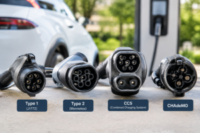
Several EV charging connector types are used worldwide, including J1772, NACS, CCS, Type 2, CCS2, CHAdeMO, and GB/T. In North America, J1772 and NACS are especially important for AC charging, while CCS1 and NACS are used for DC fast charging.
People often use the terms EV connector, charging plug, charging port, and charging cable interchangeably, but they refer to different parts of an EV charging system. Understanding these differences makes it easier to identify your vehicle’s connection type, choose compatible charging equipment, and know when an adapter may be needed.
This guide explains the main EV charging connector types, how they differ, where they are used, and how to match an EV connector with your vehicle.
Table of Contents
What Is an EV Charging Connector?
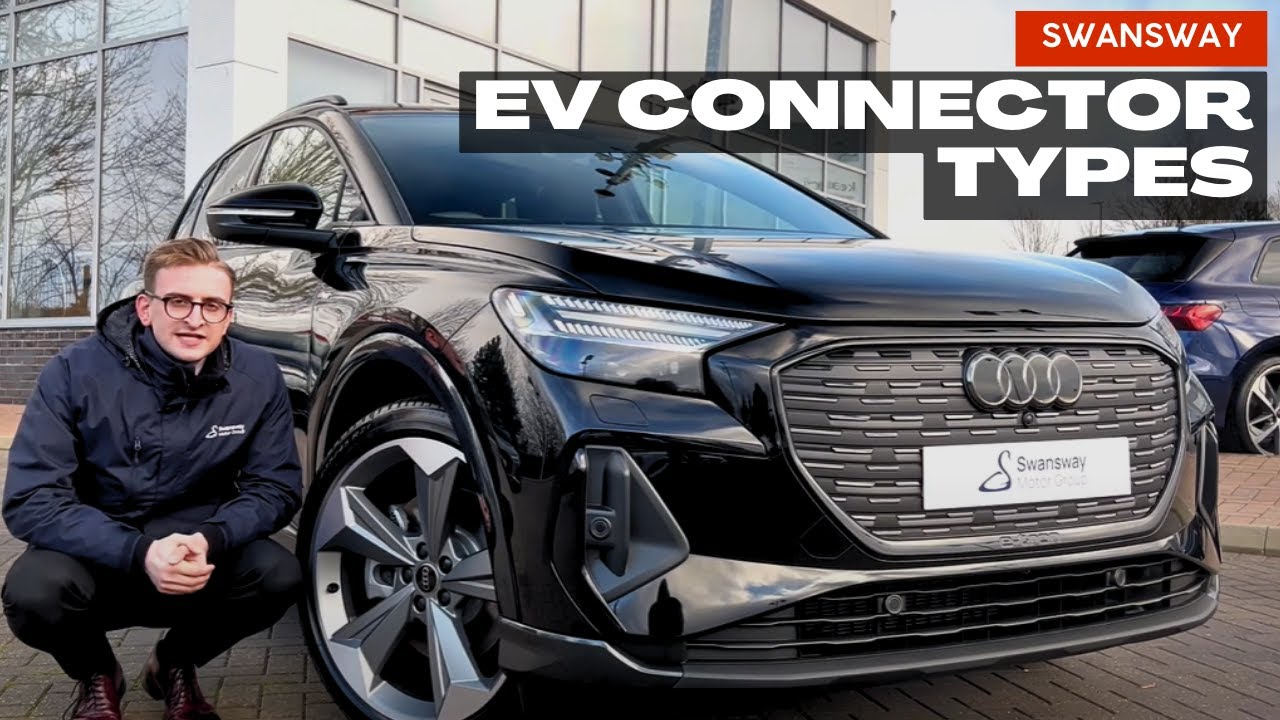
An EV charging connector is the physical connection between an electric vehicle and charging equipment. It plugs into the vehicle’s charging port and allows electrical power to flow from the charging equipment to the vehicle.
The connector is one part of the overall EV charging system, which can include the charging station, charging cable, plug, vehicle charging port, and EVSE.
Different electric vehicles use different connector designs, so compatibility is important before using a charger.
EV Charging Connector vs EV Charger
An EV charger and an EV charging connector are not the same thing.
The charging equipment, often called EVSE (Electric Vehicle Supply Equipment), supplies electricity and manages the connection with the vehicle. The connector is the physical plug attached to the charging cable that connects to the vehicle.
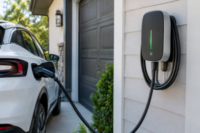
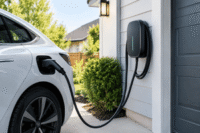
For example, a home Level 2 charger may use a J1772 connector or NACS connector, depending on the vehicle and charging equipment.
EV Charging Port vs Charging Connector
The charging port is located on the electric vehicle. The charging connector plugs into that port.
| Part | Location | Purpose |
| Charging port | On the EV | Receives the connector |
| Charging connector | On the charging cable | Connects to the EV |
| Charging cable | Between equipment and EV | Carries electrical power |
| EVSE | Charging equipment | Controls and supplies power |
The connector must match the vehicle’s charging port, either directly or through a compatible EV charging adapter.
For home charging, the most important connector types for US EV owners include J1772 and NACS. Other standards such as CCS1, Type 2, CCS2, CHAdeMO, and GB/T are also used in different vehicles and regions.
J1772 / Type 1 EV Charging Connector
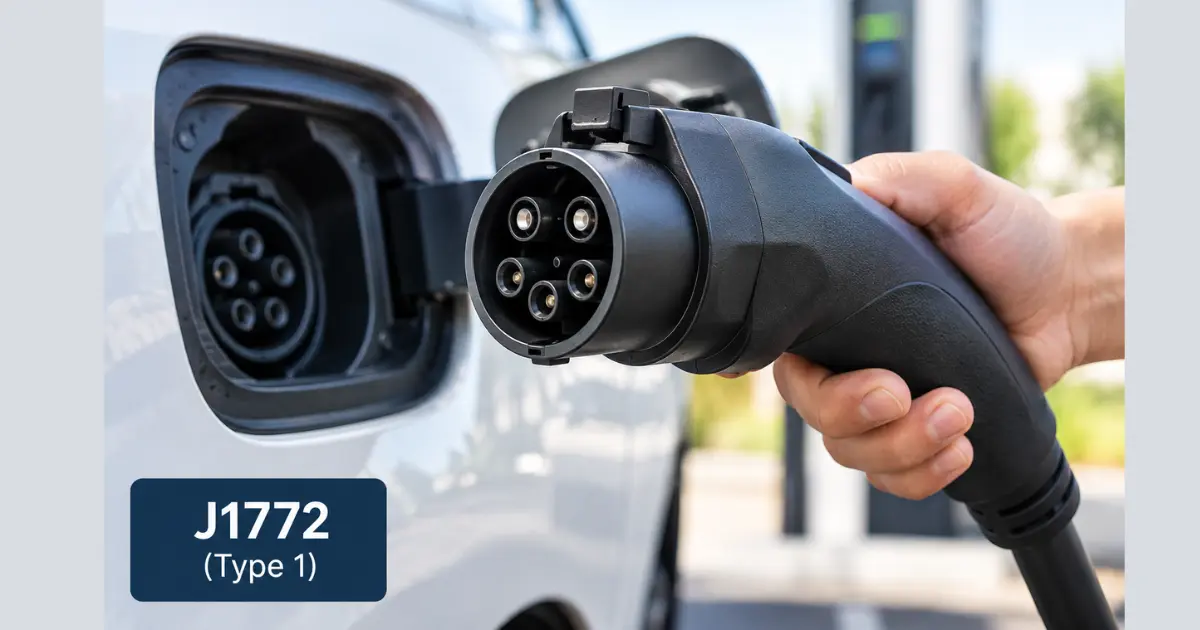
The J1772 connector, also called Type 1, is one of the best-known EV charging connectors for AC charging in North America. It can be used for both Level 1 and Level 2 charging, making it common in home EV charging.
What Is J1772?
SAE J1772 is a charging standard developed for electric vehicles. The connector includes contacts for AC power along with communication and grounding connections that help the vehicle and charging equipment work together.
A J1772 connection is generally used for AC charging. The vehicle’s onboard charger converts the incoming AC electricity into DC power that can be stored in the battery.
Where Is J1772 Used?
J1772 has been widely used by EV manufacturers in the United States and Canada. Many non-Tesla electric vehicles have traditionally used a J1772 charging port for AC charging.
You may find J1772 connectors with:
- Home Level 1 chargers
- Home Level 2 chargers
- Workplace charging equipment
- Public AC charging stations
- Portable EV charging equipment
The actual charging speed depends on the vehicle, charging equipment, and available electrical power.
J1772 for Level 1 and Level 2 Charging
One important feature of J1772 is that the same basic connector standard can support both Level 1 and Level 2 EV charging.
Level 1 charging typically uses a standard household electrical supply and provides slower charging. Level 2 charging uses higher-voltage AC power and can provide substantially faster charging at home.
The connector is only one part of a home charging installation. The electrical supply, circuit capacity, charger output, and vehicle charging capability also affect the setup. Before installing a higher-powered charger, review the electrical requirements for a Level 2 charger and make sure the equipment matches the home’s electrical capacity.
J1772 Compatibility With EVs
If your electric vehicle has a J1772 charging port, compatible J1772 charging equipment can connect directly without a connector adapter.
However, connector compatibility is only one part of the process. You should also check:
- The vehicle’s maximum AC charging rate
- The charger’s output power
- Level 1 or Level 2 compatibility
- Cable and connector rating
- Whether the charger is suitable for indoor or outdoor use
J1772 remains important even as NACS/J3400 becomes more common in North America. Appropriate adapters can allow some vehicles and charging equipment using different standards to work together.
NACS / SAE J3400 Charging Connector
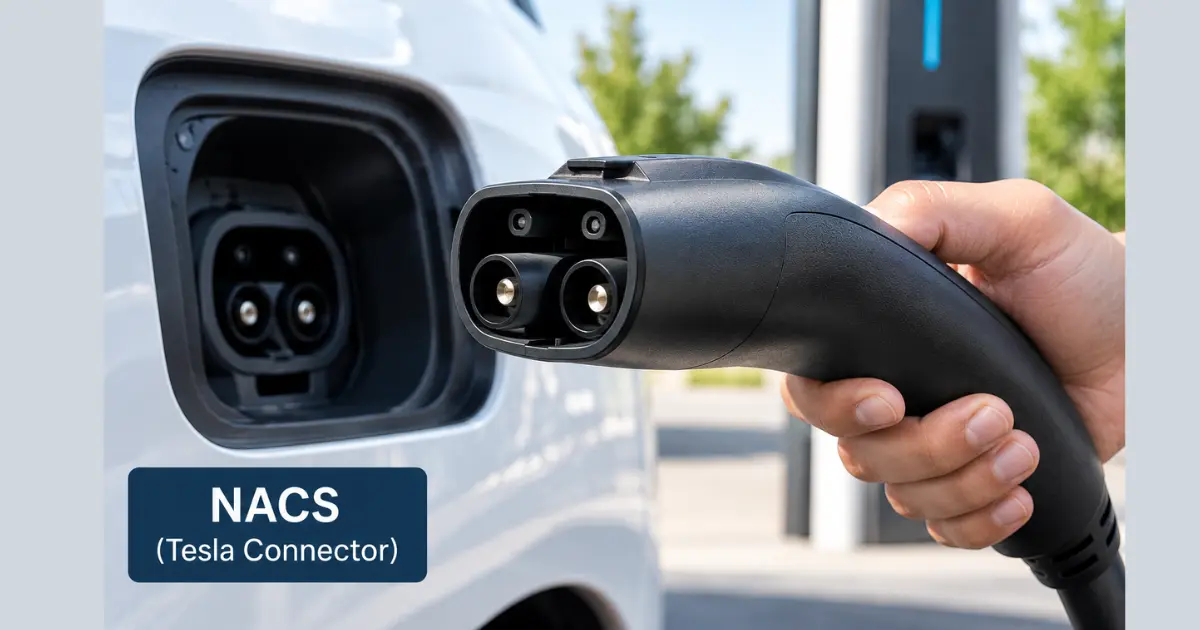
NACS, now standardized as SAE J3400, is an important EV charging connector in North America. It is strongly associated with Tesla vehicles and has also been adopted by other automakers.
Unlike J1772, which is primarily an AC charging connector, J3400 can support both AC and DC charging through the same physical connector.
What Is NACS?
NACS stands for North American Charging Standard. SAE later standardized the connector as SAE J3400.
The connector has a compact design with two main power contacts. Depending on the charging equipment, the same physical connection can deliver AC power for home charging or DC power for faster charging.
This makes J3400 relevant when choosing an EV charger for home or checking whether a public charging station matches your vehicle.
Where Is NACS Used?
NACS was first widely associated with Tesla vehicles and Tesla charging equipment. Other automakers have increasingly adopted the connector for vehicles sold in North America.
You may encounter J3400 connectors on:
- Home AC charging stations
- Tesla charging equipment
- Public DC fast chargers
- Workplace charging stations
- Portable charging equipment
- Newer EVs designed for the North American market
The charging speed depends on the vehicle, charger, electrical supply, and charging station.
NACS for Home EV Charging
For home charging, J3400 can be used for Level 2 AC charging. The connector itself does not determine how quickly an EV charges.
Two vehicles using the same connector can have different maximum AC charging rates. The vehicle’s onboard charger and the EV charger’s power output both affect the final charging speed.
When comparing home charging options, understanding the difference between Level 1 and Level 2 charging helps you match the connector and charging equipment to your vehicle’s needs.
NACS vs J1772
NACS/J3400 and J1772 can both be used for AC charging, but their physical designs are different.
| Feature | NACS / J3400 | J1772 |
| AC charging | Yes | Yes |
| DC charging | Yes | No |
| Common use | North American EVs | Many non-Tesla EVs |
| Home Level 2 charging | Yes | Yes |
| Connector design | Compact | Larger |
The connector your vehicle uses is important when selecting charging equipment. However, connector compatibility alone does not determine maximum charging speed.
Can NACS EVs Use J1772 Chargers?
In some situations, an EV with a J3400 charging port can use J1772 charging equipment through a compatible J1772-to-NACS adapter.
The adapter must be suitable for the intended charging application and rated for the electrical load involved. Vehicle and charger manufacturers may also have specific compatibility requirements.
This can be useful for EV owners who already have access to J1772 charging equipment but drive a vehicle with a J3400 port.
For a broader look at residential charging equipment, see our information on electric car charging stations at home.
CCS Charging Connector
CCS, or Combined Charging System, is an EV charging connector system designed to support both AC charging and DC fast charging. It has been widely used by electric vehicle manufacturers in North America and other markets.
CCS combines an AC charging connection with additional DC power contacts. This allows one vehicle charging port to handle both charging methods.
What Is a CCS Connector?
A CCS connector adds two large DC power pins below the AC portion of the connector. The exact design depends on the CCS version.
In North America, CCS1 uses the J1772-style AC connection. In Europe and many other regions, CCS2 is based on the Type 2 connector.
Therefore, CCS1 and CCS2 are different physical connector types and should not be treated as interchangeable.
CCS1 vs CCS2
| Feature | CCS1 | CCS2 |
| Main market | North America | Europe and many other regions |
| AC connector base | Type 1 / J1772 | Type 2 |
| DC fast charging | Yes | Yes |
| AC charging | Yes | Yes |
| Physical design | Two DC pins below J1772 | Two DC pins below Type 2 |
When choosing charging equipment, check which CCS version your vehicle supports rather than assuming that every CCS charger will fit.
How Does CCS Charging Work?
With AC charging, electricity passes through the connector to the vehicle’s onboard charger. The onboard charger converts AC electricity into DC power for the battery.
With DC fast charging, the charging station performs the AC-to-DC conversion before electricity reaches the vehicle battery. This allows higher charging power than typical home AC charging.
Actual charging speed depends on several factors, including:
- EV battery capacity
- Vehicle charging limits
- Charger power output
- Battery temperature
- State of charge
- Charging station capacity
A CCS connector therefore identifies the connection standard, but it does not guarantee a specific charging speed.
CCS for Home Charging
CCS is most commonly associated with DC fast charging, while residential EV charging is usually based on AC charging.
A vehicle with a CCS1 port can generally use its AC connection for Level 1 or Level 2 home charging. The full CCS1 connection can then be used when the vehicle accesses a compatible DC fast charging station.
For residential installations, the home’s electrical capacity and the charger’s power rating are usually more important than DC fast charging capability.
Before installing a Level 2 charger, check whether the existing electrical system can support the selected equipment.
CCS Compatibility
Before using a CCS charging station, verify:
- Your EV supports the CCS version being offered.
- The connector physically matches your vehicle.
- The station provides the charging type your vehicle can accept.
- The vehicle’s maximum charging rate is compatible with the station.
Adapters can sometimes provide compatibility between different connector systems, but they should only be used when specifically designed and approved for the intended charging application.
This makes EV connector compatibility important when selecting both public charging stations and home charging equipment.
Type 2 EV Charging Connector
The Type 2 connector is a common EV charging connector for AC charging, especially in Europe and many other regions. It is also known as the Mennekes connector.
Type 2 is commonly found on home Level 2 chargers, workplace charging stations, and public AC charging points.
What Is a Type 2 Connector?
A Type 2 connector is designed for AC electricity and can support different charging power levels depending on the vehicle and charging equipment.
The connector includes power contacts along with pins used for grounding and communication between the EV and charging equipment.
A standard Type 2 connector is primarily an AC connection. CCS2 adds two additional DC power contacts below the Type 2 section for DC fast charging.
Where Is Type 2 Used?
Type 2 became the standard AC charging connector for many electric vehicles and charging stations in Europe.
You can find Type 2 connections on:
- Home Level 2 EV chargers
- Public AC charging stations
- Workplace charging points
- Portable EV charging equipment
- Electric vehicles sold in European markets
It is also used in other regions that follow European charging standards.
Type 2 for Home Charging
Type 2 is widely used for home AC charging, particularly with Level 2 equipment.
Charging speed depends on the vehicle’s onboard charger, available electrical supply, and charger power rating. A Type 2 connector itself does not determine the maximum charging speed.
For homeowners, the vehicle’s AC charging capability and the home’s electrical capacity both need to be considered.
Your home EV charging setup should therefore be matched to both the vehicle and available electrical supply.
Type 2 vs CCS2
Type 2 and CCS2 are closely related but serve different charging purposes.
| Feature | Type 2 | CCS2 |
| AC charging | Yes | Yes |
| DC fast charging | No | Yes |
| Common use | AC charging | AC and DC charging |
| Connector design | Type 2 | Type 2 section + 2 DC pins |
| Home charging | Common | Uses Type 2 section for AC |
A vehicle with a CCS2 charging port can generally accept Type 2 AC charging because the Type 2 section forms the upper part of the CCS2 connection.
Is Type 2 the Same as J1772?
No. Type 2 and J1772 are different physical connector standards.
J1772, also called Type 1, is commonly associated with North American AC charging. Type 2 is widely used in Europe and other markets.
Both can support AC charging, but their connector shapes and electrical configurations differ.
This is why checking your vehicle’s charging port type is important before purchasing an EV charger or charging cable.
CHAdeMO EV Charging Connector
CHAdeMO is a DC fast charging connector standard that was widely used by several electric vehicles, particularly earlier EV models. It was developed in Japan and became one of the major DC charging standards before newer connector systems became more common.
Unlike connectors mainly used for AC home charging, CHAdeMO was designed primarily for DC fast charging.
What Is a CHAdeMO Connector?
A CHAdeMO connector has multiple pins that handle DC power and communication between the vehicle and charging station.
During DC charging, the charging station converts electricity from AC to DC before sending it directly to the vehicle battery. This allows the vehicle to receive DC power without relying on its onboard AC charger for the conversion.
CHAdeMO also supports communication between the EV and charger so that charging can be controlled according to the vehicle’s requirements.
Where Is CHAdeMO Used?
CHAdeMO was particularly common on Japanese EVs and was also available on some vehicles sold in North America and Europe.
You may still find CHAdeMO connectors at:
- Public DC fast charging stations
- Older EV charging networks
- Some highway charging locations
- Earlier Nissan and Mitsubishi EV models
- Certain older electric vehicles from other manufacturers
Availability varies by location and charging network.
CHAdeMO vs CCS
CHAdeMO and CCS both support DC fast charging, but they use different connector designs and charging systems.
| Feature | CHAdeMO | CCS |
| Main purpose | DC fast charging | AC and DC charging |
| AC charging through connector | No | Yes |
| DC charging | Yes | Yes |
| Connector design | Dedicated multi-pin connector | AC connector combined with DC pins |
| Common association | Japanese EVs | Many North American and European EVs |
A vehicle designed for CHAdeMO generally needs a compatible CHAdeMO charging station or an appropriate approved adapter where supported.
CHAdeMO for Home Charging
CHAdeMO is not normally used for standard home EV charging.
Most homeowners charge their vehicles using Level 1 or Level 2 AC equipment. DC fast charging requires more powerful electrical infrastructure and specialized charging equipment, making it different from a typical residential charger.
For everyday home charging, the vehicle’s AC charging port and available household electrical supply are usually more relevant.
Is CHAdeMO Still Used?
CHAdeMO remains relevant for vehicles that were built with the standard. If you own an EV with a CHAdeMO port, check the charging networks available in your area before relying on public DC fast charging.
When comparing EV charging connectors, consider not only the physical plug but also your vehicle’s charging capabilities and the charging infrastructure available where you drive.
GB/T EV Charging Connector
GB/T is an EV charging connector standard developed in China. It is widely used by electric vehicles and charging equipment in the Chinese market.
The GB/T system includes separate connector standards for AC charging and DC charging, unlike some connector designs that combine both charging methods into one vehicle port.
What Is a GB/T Connector?
GB/T refers to a group of Chinese national standards covering electric vehicle charging connections.
There are two main connector types:
- GB/T AC connector for normal AC charging
- GB/T DC connector for fast DC charging
The connectors have different physical designs and are not interchangeable.
Where Is GB/T Used?
GB/T is primarily associated with China’s EV market. Many electric vehicles manufactured for the Chinese market use GB/T charging connections.
You may encounter GB/T connectors on:
- Chinese electric vehicles
- Home AC charging equipment
- Public AC charging stations
- DC fast charging stations
- Commercial EV charging infrastructure
If an EV was manufactured for another market, it may use another connector standard such as J1772, Type 2, CCS, or NACS/J3400.
GB/T AC and DC Charging
The GB/T AC connector is used for regular EV charging and can be found in residential and public charging applications.
As with other AC charging systems, the vehicle’s onboard charger converts AC electricity into DC power for the battery.
GB/T also has a dedicated DC charging connector for higher-power charging. During DC fast charging, the charging station performs the AC-to-DC conversion before delivering electricity to the vehicle battery.
The charging rate depends on the vehicle, charger, and available electrical supply. The connector standard alone does not determine how quickly an EV can charge.
GB/T vs CCS
| Feature | GB/T | CCS |
| AC charging | Yes | Yes |
| DC charging | Yes | Yes |
| Separate AC and DC connectors | Yes | No |
| Main market | China | Europe, North America, and other markets |
| Home AC charging | Common | Common |
Because connector standards vary between regions, an EV owner should check the vehicle charging port and local charging infrastructure before selecting charging equipment.
Can GB/T EVs Use Other Chargers?
Compatibility depends on the vehicle, charger, and adapter involved. A physical adapter does not automatically make two charging systems electrically or electronically compatible.
If you own an imported EV, check its exact charging standard before purchasing a home charger or charging cable. This is especially important when an EV was manufactured for the Chinese market but is being used in another country.
Understanding the difference between charging plugs, ports, and connector standards can help prevent compatibility problems when choosing EV charging equipment.
Other EV Charging Connectors
Beyond J1772, NACS, CCS, Type 2, CHAdeMO, and GB/T, several other connection methods may appear when researching EV charging plugs and ports. Most are less relevant to current North American home charging but provide useful context.
Type 3 Connector
Type 3 was developed for AC charging and was used on some early European charging equipment. It included safety features such as protective shutters, but Type 2 eventually became the dominant European AC standard.
Today, Type 3 is much less common than Type 2.
Tesla Roadster Connector
The original Tesla Roadster used a charging connection that predates the modern NACS/J3400 standard.
This connector should not be confused with the current Tesla charging connector used on newer vehicles. Owners of older EVs should check the exact model and charging equipment before assuming compatibility.
Wireless EV Charging
Wireless EV charging does not use a traditional plug. Instead, power transfers between a charging pad and equipment installed on the vehicle.
This technology is less common than plug-in charging, especially for residential use, but it shows that EV charging does not always require a physical connector.
How to Choose the Right EV Charging Connector
The easiest way to identify the correct connector is to start with your vehicle’s charging port.
Check:
- Vehicle model and year
- Charging port type
- AC charging capability
- DC fast charging capability
- Charger connector
- Electrical requirements for the installation
For home charging, the connector is only one part of the decision. The vehicle’s maximum charging rate and the home’s available electrical capacity also affect which charging setup is appropriate.
If you are comparing residential charging options, consider whether Level 1 or Level 2 EV charging better fits your daily driving needs and available electrical capacity.
EV Connector Quick Reference
| Connector | Main Charging Use | Common Market |
| J1772 / Type 1 | AC | North America |
| NACS / J3400 | AC and DC | North America |
| CCS1 | AC and DC | North America |
| Type 2 | AC | Europe and other markets |
| CCS2 | AC and DC | Europe and other markets |
| CHAdeMO | DC | Older Japanese EVs |
| GB/T | AC and DC | China |
The key is to match the connector to the vehicle and charging equipment, rather than choosing a charger based only on the plug shape.
EV Charging Connector Compatibility
Choosing an EV charging connector is mainly about matching the vehicle, charger, and charging standard. A connector that physically fits does not always mean the charging equipment is fully compatible.
Before buying or installing a charger, check the vehicle manufacturer’s specifications for its supported charging connections.
What to Check
Consider these factors:
- Vehicle charging port: Identify whether the EV uses J1772, NACS/J3400, Type 2, CCS, CHAdeMO, or GB/T.
- AC charging rate: Check the maximum AC power your vehicle can accept.
- DC charging support: Not every EV supports DC fast charging.
- Charger output: Make sure the charger’s power rating matches the vehicle’s capabilities.
- Adapter compatibility: Use only adapters designed and approved for the specific charging application.
For home charging, the connector should also match the electrical setup available at the property. A Level 2 home charging setup, for example, may require a dedicated circuit and suitable electrical capacity.
EV Charging Connector Comparison
| Connector | AC Charging | DC Fast Charging | Common Use |
| J1772 / Type 1 | Yes | No | North American AC charging |
| NACS / J3400 | Yes | Yes | North American EVs |
| CCS1 | Yes | Yes | North American EVs |
| Type 2 | Yes | No | European AC charging |
| CCS2 | Yes | Yes | European and other markets |
| CHAdeMO | No | Yes | Older EVs |
| GB/T | Yes | Yes | Chinese EVs |
For home EV charging, the most important step is identifying your vehicle’s charging port before purchasing a charger or cable. The connector must match the vehicle, while the charger’s power output must stay within the vehicle’s charging capability.
The next consideration is whether Level 1 or Level 2 charging better fits your daily driving needs and available electrical capacity.
Frequently Asked Questions
What is the most common EV charging connector?
The most common connector depends on the country and vehicle. J1772 and NACS/J3400 are important standards in North America, while Type 2 and CCS2 are widely used in Europe.
Are all EV charging connectors compatible?
No. EV connectors have different physical designs, electrical configurations, and communication standards. Always check your vehicle’s charging port before selecting a charger or cable.
What connector is used for Level 2 home charging?
The connector depends on the vehicle and market. J1772, NACS/J3400, and Type 2 are commonly associated with Level 2 AC charging in their respective markets.
Is NACS the same as J1772?
No. NACS/J3400 and J1772 are different connector standards. Some EVs can use charging equipment designed for the other connector through a compatible adapter.
What is the difference between CCS and CHAdeMO?
Both support DC fast charging, but they use different connector designs and charging systems. CCS combines AC and DC connections, while CHAdeMO uses a dedicated DC charging connection.
Can I use an adapter for a different EV connector?
Sometimes. Compatibility depends on the specific vehicle, charger, connector standards, and adapter. Use an adapter specifically designed and approved for the intended charging application.
How do I know which EV connector my car uses?
Check the vehicle’s charging-port specifications in the owner’s manual or manufacturer’s documentation. You can also identify the connector by its physical design, but manufacturer information is the safer way to confirm compatibility.
Final Thoughts
Understanding EV charging connector types makes it easier to choose compatible charging equipment and avoid connection problems. J1772, NACS/J3400, CCS1, Type 2, CCS2, CHAdeMO, and GB/T each have different designs, charging capabilities, and regional uses.
For home charging, start by identifying your vehicle’s charging port and AC charging capability. Then consider the charger’s output, electrical requirements, and whether you need Level 1 or Level 2 charging.
The connector is an important part of an EV charging system, but it is not the only factor. Vehicle compatibility, charging capability, electrical capacity, and the intended charging method should all be considered before choosing your equipment.


- Be Respectful
- Stay Relevant
- Stay Positive
- True Feedback
- Encourage Discussion
- Avoid Spamming
- No Fake News
- Don't Copy-Paste
- No Personal Attacks
- Be Respectful
- Stay Relevant
- Stay Positive
- True Feedback
- Encourage Discussion
- Avoid Spamming
- No Fake News
- Don't Copy-Paste
- No Personal Attacks
