How to Charge an Electric Car at Home: A Complete Beginner’s Guide
Published: 17 Jul 2026
If you are researching how to charge an electric car at home, you are not alone. One of the biggest concerns for first time EV buyers is understanding what happens after the vehicle is parked in the driveway. Do you need special equipment? Is charging complicated? Will it increase your electricity bill significantly?
The good news is that electric car charging at home is much easier than most people expect. In fact, many EV owners find that charging at home becomes one of their favorite parts of owning an electric vehicle. Instead of stopping at a gas station every week, you simply plug in your vehicle when you get home and let it charge while you sleep.
Most electric vehicles are designed around the idea of home charging. Public charging stations are useful during road trips and long journeys, but everyday charging usually happens at home. For many drivers, that means starting each morning with a charged battery and rarely thinking about fueling at all.
However, not every home charging setup is the same. A driver who travels 15 miles per day has very different charging needs than someone commuting 80 miles every day. Understanding these differences will help you choose the right charging solution and avoid spending money on equipment you may not actually need.
In this guide, you will learn how to charge an electric car at home, what equipment is required, how Level 1 charging compares to Level 2 charging, and how to determine which option makes the most sense for your lifestyle.
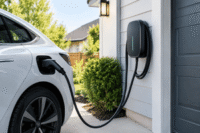
The easiest way to charge an electric car at home is by plugging it into a standard household outlet or a dedicated 240-volt charging station.
Most EV owners start with one of two options:
| Charging Type | Power Source | Typical Range Added Per Hour | Best For |
| Level 1 Charging | Standard 120-volt outlet | 3 to 5 miles | Light daily driving |
| Level 2 Charging | Dedicated 240-volt circuit | 20 to 40 miles | Daily commuting and faster charging |
If you drive less than 30 miles per day, Level 1 charging may be enough. If you drive longer distances or want faster charging, Level 2 charging is usually the better choice.
Table of Contents
Can You Charge an Electric Car at Home?
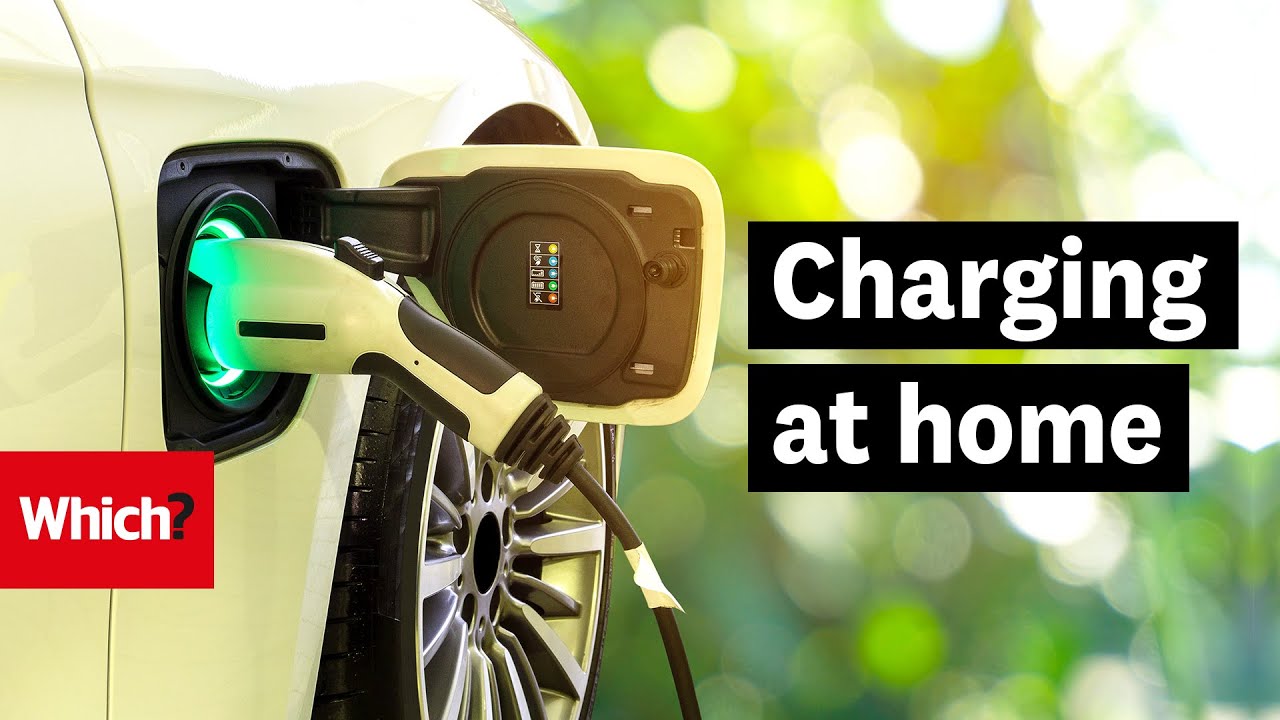
Yes. Nearly every modern electric vehicle can be charged at home. For a more detailed look at home charging feasibility, see Can You Charge an Electric Car at Home?
In fact, manufacturers expect owners to do most of their charging at home rather than at public charging stations. Whether you own a Tesla, Ford Mustang Mach E, Hyundai Ioniq 5, Chevrolet Equinox EV, Kia EV6, Rivian R1S, or another electric vehicle, the basic process is similar.
You connect the vehicle to a power source, the charging equipment communicates with the vehicle, and electricity flows safely into the battery.
Many first-time buyers assume they need a professionally installed home EV charger before purchasing an electric vehicle. That is not always true. Most vehicles include a portable charging cable that allows you to begin charging immediately using a standard household outlet.
The more important question is not whether you can charge an electric car at home. The real question is whether your daily driving habits require a faster charging solution.
Scenario 1: The Short Distance Commuter
Imagine Sarah drives 18 miles to work and 18 miles back home each day.
Her total daily driving distance is about 36 miles.
She plugs her EV in every evening around 7 PM and leaves it connected until 7 AM.
For someone like Sarah, Level 1 charging may be sufficient because the vehicle has plenty of time to recover the energy used during the day.
Scenario 2: The Long Distance Commuter
Now consider David, who drives 75 miles per day.
His vehicle consumes significantly more energy and needs to recharge a larger amount each night.
In this case, relying solely on a standard outlet may become frustrating because charging speeds are much slower.
A dedicated Level 2 charging setup would likely provide a better experience.
These examples demonstrate why there is no single home charging solution that works for everyone.
Why Most EV Owners Prefer Home Charging
The biggest advantage of charging an EV at home is convenience.
Think about how often you currently stop at a gas station.
Even if it only takes ten minutes, those trips add up over months and years.
Home charging changes that routine completely.
Instead of making a special trip, your vehicle charges while you are already at home. The battery gains energy while you sleep, watch television, spend time with family, or work from home.
Many experienced EV owners say that once they get used to waking up with a charged battery every morning, they never want to return to the traditional fueling model.
Cost is another major reason people prefer electric car charging at home.
While electricity prices vary by location, home charging is generally less expensive than public fast charging. Many utility companies also offer reduced overnight rates that allow EV owners to charge during off peak hours and save even more money.
For example, a driver covering 1,000 miles per month may spend far less on electricity than they previously spent on gasoline, especially when charging during lower cost periods.
The combination of convenience and lower operating costs is one reason EV adoption continues to grow across the United States.
What Do You Need to Charge an Electric Car at Home?
To understand how to charge an electric car at home, it helps to understand the three components involved.
1. The Electric Vehicle
Every EV contains an onboard charger that controls how electricity enters the battery.
Many new EV owners assume the wall unit performs all charging functions, but the vehicle itself plays a major role in managing the charging process.
2. EV Charging Equipment
The second component is EVSE, short for Electric Vehicle Supply Equipment.
This equipment safely delivers power from your home to the vehicle.
Examples include:
- Portable charging cables
- Plug in charging units
- Wall mounted charging stations
- Smart chargers with scheduling features
A smart charger can provide additional benefits such as energy tracking, charging schedules, and integration with utility rate plans.
3. Your Home’s Electrical System
The final component is your home’s electrical supply.
The amount of available power determines how quickly you can charge your EV.
Some homeowners can immediately support a Level 2 charger. Others may need electrical upgrades before installing faster charging equipment.
We will cover those electrical requirements in a separate guide because they deserve detailed attention.
Understanding Charging Speed
One of the most misunderstood parts of home charging is charging speed.
Many new EV owners focus on battery size without understanding how quickly energy can actually be delivered to the vehicle.
Charging speed is measured in kilowatts, commonly written as kW.
A higher kW rating generally means the battery can gain energy more quickly.
However, faster is not always necessary.
Consider these examples:
| Daily Driving Distance | Typical Energy Needed | Recommended Charging Method |
| 0 to 20 miles | Low | Level 1 Charging |
| 20 to 40 miles | Moderate | Level 1 or Level 2 |
| 40 to 60 miles | Higher | Level 2 Charging |
| 60+ miles | High | Level 2 Charging |
Many homeowners immediately assume they need the fastest charging solution available.
In reality, the best charging setup depends on how much energy you need to replace each day.
Choosing the right charging speed is about matching your charging system to your driving habits rather than simply buying the most powerful equipment available.
Level 1 Charging Explained
Level 1 charging is the simplest and most accessible way to charge an electric vehicle at home.
It uses a standard 120 volt household outlet, which means most drivers already have everything they need to begin charging.
This is one reason many people start researching how to charge electric car at home before purchasing additional charging equipment.
The biggest advantage of Level 1 charging is simplicity.
You bring the vehicle home, connect the charging cable, and begin charging.
There is no installation process, no specialized equipment, and no additional upfront investment.
For light daily driving, this approach can work surprisingly well.
A driver traveling 20 to 30 miles per day may find that overnight charging fully replaces the energy used during the day.
However, Level 1 charging is not perfect.
Most systems add only 3 to 5 miles of driving range per hour of charging.
That means recovering 50 or 60 miles of daily driving can require a very long charging session.
As battery capacities continue to increase and more households adopt electric vehicles, many owners eventually transition to Level 2 charging for faster and more flexible home charging.
Level 2 Charging Explained
While Level 1 charging works well for some drivers, many EV owners eventually upgrade to Level 2 charging because it offers a much faster and more convenient charging experience.
A Level 2 charger uses a 240 volt electrical circuit, similar to the circuits used for large household appliances such as electric dryers or ovens. The higher voltage allows significantly more electricity to flow to the vehicle, reducing charging times and making it easier to keep the battery topped up.
For many households, Level 2 charging transforms EV ownership from something that requires planning into something that simply happens in the background.
How Fast Is Level 2 Charging?
One of the biggest differences between Level 1 and Level 2 charging is charging speed.
| Charging Type | Typical Power Output | Range Added Per Hour |
| Level 1 Charging | 1.2 to 1.9 kW | 3 to 5 miles |
| Level 2 Charging | 3.3 to 11.5 kW | 20 to 40+ miles |
The exact charging speed depends on:
- The charger’s power output
- The vehicle’s onboard charger
- Battery condition
- Temperature conditions
For example, a vehicle that takes more than a full day to recharge using Level 1 charging may recharge overnight using a Level 2 charger.
Real World Example
Let’s compare two EV owners.
Emily drives 25 miles per day.
Her vehicle consumes roughly 8 kWh daily.
A Level 1 charger can easily replace that energy overnight.
Now consider Michael, who drives 70 miles every day and regularly takes weekend trips.
His vehicle may require more than 20 kWh each day.
Although Level 1 charging could eventually replace that energy, the charging window becomes much tighter.
For Michael, Level 2 charging provides peace of mind because the battery can recover daily energy usage much faster.
This is why there is no universal answer to the question of how to charge an electric car at home. The right solution depends on how much you drive.
Do You Actually Need a Level 2 Charger?
One of the biggest mistakes new EV owners make is assuming they need the most powerful charging setup available.
In reality, many households can comfortably live with Level 1 charging.
Before spending money on a charger or scheduling an installation, ask yourself these questions:
How Many Miles Do You Drive Each Day?
This is usually the most important factor.
| Daily Driving Distance | Recommended Setup |
| Under 30 miles | Level 1 may be enough |
| 30 to 50 miles | Depends on charging habits |
| Over 50 miles | Level 2 usually recommended |
How Long Is Your Vehicle Parked?
A vehicle parked for 12 hours overnight has far more charging opportunities than a vehicle parked for only a few hours.
Do You Have More Than One EV?
Households with multiple electric vehicles often benefit from Level 2 charging because more energy needs to be replaced each day.
Do You Frequently Take Long Trips?
Drivers who regularly return home with a nearly depleted battery often appreciate the faster recovery time provided by Level 2 charging.
The goal is not to buy the fastest charger possible.
The goal is to buy enough charging capability to comfortably support your lifestyle.
What Is a Home EV Charger?
When people talk about a home EV charger, they are usually referring to the equipment mounted on a wall or connected to a dedicated electrical circuit.
Technically, this equipment is called EVSE, or Electric Vehicle Supply Equipment.
Its job is to safely deliver electricity from your home’s electrical system to the vehicle.
Modern chargers range from basic charging units to advanced smart chargers with features such as:
- Scheduled charging
- Energy tracking
- Mobile app controls
- Utility integration
- Load management
For many homeowners, a basic charger is perfectly adequate.
Others prefer smart chargers because they provide greater control over charging schedules and electricity costs.
Understanding Smart Chargers
A smart charger does more than simply supply electricity.
It can monitor charging sessions, track energy usage, and schedule charging during lower cost periods.
Imagine your utility company charges lower rates after 10 PM.
A smart charger can automatically delay charging until those lower rates begin.
Over time, this can reduce overall EV charging cost without requiring any effort from the driver.
Some smart chargers also provide detailed reports showing:
- Energy consumption
- Charging history
- Estimated charging expenses
- Charging efficiency
These features are not essential for every homeowner, but they can be useful for drivers who want to optimize charging costs.
EV Charger Installation Basics
Many homeowners researching how to charge an electric car at home eventually start looking into EV charger installation.
The complexity of installation depends largely on your home’s existing electrical system.
Some homes already have sufficient electrical capacity to support a charger.
Others may require additional electrical work before installation.
A common setup involves installing a dedicated 240 volt circuit near the parking area.
This circuit allows the charger to deliver higher charging speeds safely and consistently.
One term you may encounter during your research is NEMA 14 50 outlet.
This is a commonly used 240 volt outlet that supports many Level 2 charging solutions. Some chargers plug directly into this outlet, while others are permanently hardwired.
The best choice depends on your charging needs, local electrical codes, and long term plans.
Because electrical requirements vary widely between homes, we will explore this topic in greater detail in our dedicated guide on Level 2 EV Charger Electrical Requirements.
Common Mistakes When Choosing a Home Charging Setup
Many first time EV owners focus entirely on charging speed.
That approach can lead to unnecessary spending.
Some drivers purchase powerful charging equipment even though their daily driving habits would be fully supported by a simpler solution.
Others underestimate their future charging needs and end up upgrading shortly after installation.
Before choosing a charging setup, think about:
- Current driving habits
- Future vehicle purchases
- Household driving patterns
- Utility rate options
- Long term ownership plans
The best charging setup is not necessarily the fastest or most expensive.
It is the one that consistently meets your needs without creating unnecessary costs.
How Long Does It Take to Charge an Electric Car at Home?
One of the most common questions people ask when learning how to charge an electric car at home is how long the charging process actually takes.
The answer depends on several factors, including:
- Battery size
- Charging level
- Charger power output
- Current battery percentage
- Vehicle charging capabilities
A larger battery naturally requires more time to recharge than a smaller battery. Likewise, a vehicle connected to a Level 2 charger will recharge much faster than one connected to a standard household outlet.
Typical Home Charging Times
The table below shows general charging estimates for a midsize electric vehicle.
| Charging Method | Typical Charging Time |
| Level 1 Charging | 20 to 50 hours |
| Level 2 Charging | 6 to 12 hours |
These estimates vary by vehicle, but they illustrate why many drivers eventually choose Level 2 charging.
Real World Example
Imagine your EV has a 75 kWh battery and you return home with 40 percent charge remaining.
You need to add roughly 45 kWh to reach a full charge.
Using Level 1 charging, that process could take more than a full day.
Using a Level 2 charger, the same energy could often be added overnight.
This is why charging speed should always be evaluated based on your daily driving habits rather than battery size alone.
For many drivers, the goal is not charging from empty to full every day. The goal is simply replacing the energy used during normal driving.
How Much Does It Cost to Charge an Electric Car at Home?
Another major reason people research electric car charging at home is cost.
Fortunately, calculating charging costs is relatively straightforward.
The basic formula is:
Electricity Used × Electricity Rate = Charging Cost
For example:
| Example Calculation | Value |
| Battery Capacity | 60 kWh |
| Electricity Rate | $0.15 per kWh |
| Estimated Full Charge Cost | $9.00 |
In this example, completely charging a 60 kWh battery would cost approximately nine dollars.
However, most drivers do not fully charge from empty every day. Daily charging costs are often much lower because only the energy used during driving needs to be replaced.
Example Monthly Charging Costs
| Monthly Driving Distance | Estimated Charging Cost |
| 500 Miles | $20 to $40 |
| 1,000 Miles | $40 to $80 |
| 1,500 Miles | $60 to $120 |
Actual costs vary depending on:
- Electricity prices
- Vehicle efficiency
- Driving habits
- Weather conditions
- Charging losses
Many utility companies also offer special EV charging plans that reduce costs during overnight hours.
Because charging costs deserve a detailed discussion, we cover them separately in our guide on Cost to Charge an Electric Car at Home.
Step by Step Guide to Setting Up Home EV Charging
If you are ready to start charging an EV at home, follow these steps.
Step 1: Evaluate Your Driving Needs
Start by understanding your typical daily mileage.
Ask yourself:
- How many miles do I drive each day?
- How long is my vehicle parked overnight?
- Do I expect my driving habits to change?
The answers will help determine whether Level 1 or Level 2 charging makes more sense.
Step 2: Choose a Charging Method
If your daily mileage is relatively low, you may be able to begin with Level 1 charging.
Drivers who travel longer distances often prefer a dedicated home charging station.
Step 3: Review Your Electrical System
Before installing a Level 2 charger, determine whether your home’s electrical system can support additional load.
Some homes may require:
- Circuit upgrades
- Panel upgrades
- Additional wiring
A licensed electrician can evaluate your existing setup.
Step 4: Select Charging Equipment
When choosing a home EV charger, consider:
- Charging speed
- Smart features
- Warranty coverage
- Weather resistance
- Connector compatibility
Do not assume the most expensive charger is automatically the best option.
Step 5: Install and Test the System
Once installation is complete:
- Verify proper operation
- Test charging sessions
- Configure charging schedules
- Monitor charging performance
A properly installed charger should provide years of reliable service.
Home EV Charging Safety Tips
Safety should always be a priority when learning how to charge electric car at home.
Fortunately, modern charging systems include multiple safety features designed to protect both the vehicle and the home.
Follow these best practices:
- Use charging equipment approved by recognized safety organizations.
- Inspect charging cables regularly.
- Avoid damaged plugs or connectors.
- Keep charging equipment dry and protected from standing water.
- Follow manufacturer instructions.
- Avoid using extension cords unless specifically approved by the manufacturer.
Proper installation and regular inspections can help ensure safe long term operation.
Common Home EV Charging Mistakes
Many new EV owners make avoidable mistakes during the first few months of ownership.
Buying More Charger Than Necessary
Some drivers purchase powerful charging systems without evaluating their actual needs.
For light daily driving, a simpler solution may work perfectly well.
Ignoring Utility Rate Plans
Many electricity providers offer reduced overnight rates.
Failing to take advantage of these plans can increase charging costs unnecessarily.
Waiting Until the Battery Is Nearly Empty
Most manufacturers recommend regular charging rather than repeatedly allowing the battery to reach very low levels.
Choosing Equipment Based Only on Price
The cheapest charger is not always the best value.
Reliability, safety certifications, warranty coverage, and support should all be considered.
Key Takeaways
- Learning how to charge an electric car at home is easier than many first time buyers expect.
- Most EV owners rely on home charging for everyday driving.
- Level 1 charging can work well for shorter commutes and lighter driving.
- Level 2 charging provides faster charging and greater flexibility.
- The best charging solution depends on your driving habits, vehicle, and home electrical setup.
- Home charging is often more convenient and more affordable than relying on public charging.
Conclusion
Understanding how to charge an electric car at home is an essential part of EV ownership. Whether you begin with Level 1 charging using a standard outlet or upgrade to Level 2 charging with a dedicated charging station, the right setup can make owning an electric vehicle simple and convenient.
The key is choosing a charging solution that matches your daily driving needs rather than focusing only on maximum charging speed. By understanding charging times, costs, equipment options, and safety considerations, you can create a reliable home charging setup that supports your lifestyle for years to come.
For most drivers, the ability to leave home each morning with a charged battery quickly becomes one of the most valuable benefits of owning an electric vehicle.
Frequently Asked Questions
How do you charge an electric car at home without a charging station?
You can charge most electric vehicles using the Level 1 charging cable included with the vehicle. This cable plugs into a standard 120 volt household outlet and allows you to start charging immediately without installing a dedicated charging station. While charging speeds are slower, it can be sufficient for drivers with shorter daily commutes.
Is it cheaper to charge an electric car at home or at a public charging station?
In most cases, charging an electric car at home is cheaper than using public charging stations. Home electricity rates are usually lower than public charging rates, especially if you charge during off peak hours. Public DC fast chargers are convenient for long trips but often cost more per kilowatt hour.
Can I plug my EV into a regular wall outlet?
Yes. Most electric vehicles can be charged using a standard household outlet through Level 1 charging. However, charging is much slower than with a Level 2 charger and may not be practical for drivers who travel long distances every day.
Do I need a Level 2 charger at home?
Not necessarily. The right charging solution depends on your driving habits. If you drive less than 30 miles per day and can charge overnight, Level 1 charging may be enough. Drivers with longer commutes often benefit from a Level 2 charger because it provides much faster charging speeds.
How much does a home EV charger cost?
Most home EV chargers cost between $300 and $800 for the equipment alone. Installation costs vary depending on your home’s electrical system, distance from the electrical panel, and local labor rates.
How much does charging an electric car increase your electricity bill?
The increase depends on how much you drive, your vehicle’s efficiency, and local electricity rates. Many EV owners find that charging costs are significantly lower than their previous gasoline expenses, even after accounting for higher electricity usage.
Can I charge my EV every night?
Yes. Most manufacturers recommend regular charging, especially for daily drivers. Modern electric vehicles are designed to manage charging safely and protect battery health during routine charging.
Should I charge my EV to 100 percent every day?
For most electric vehicles, charging to 80 percent is often recommended for daily driving because it can help reduce long term battery degradation. However, manufacturer recommendations vary, so always follow the guidance for your specific vehicle.
Can I charge an electric car in the rain?
Yes. Electric vehicles and charging equipment are designed with safety features that allow charging in rain and other normal weather conditions. As long as the equipment is properly installed and in good condition, charging in wet weather is generally safe.
What is the best time to charge an electric car at home?
The best time is often during off peak hours when electricity rates are lower. Many utility companies offer reduced overnight pricing, making nighttime charging the most cost effective option for EV owners.


- Be Respectful
- Stay Relevant
- Stay Positive
- True Feedback
- Encourage Discussion
- Avoid Spamming
- No Fake News
- Don't Copy-Paste
- No Personal Attacks
- Be Respectful
- Stay Relevant
- Stay Positive
- True Feedback
- Encourage Discussion
- Avoid Spamming
- No Fake News
- Don't Copy-Paste
- No Personal Attacks
