EV Charger Installation: Complete Home Guide
Published: 29 Aug 2026
Installing an EV charger at home can make charging an electric vehicle more convenient because your car can recharge while parked at home. But EV charger installation is more than placing a charger on a wall. The charger, vehicle, electrical system, circuit, and installation location all need to work together.
For some drivers, a Level 1 charging setup may use a suitable 120-volt household outlet. A Level 2 home charger uses higher-voltage AC power and generally requires more electrical planning. The U.S. Department of Energy notes that many EV owners charge at home with Level 1 or Level 2 equipment, with Level 2 commonly used when faster home charging is needed.
In this guide, you’ll learn what EV charger installation involves, what you need before installation, how electrical capacity and circuit requirements affect the setup, where a charger can be installed, when professional electrical work may be needed, and what factors can affect installation cost.
EV charger installation connects an electric vehicle charger to a home’s electrical system. The installation may involve selecting compatible charging equipment, checking electrical capacity, installing the appropriate circuit and wiring, choosing a suitable location, and connecting and testing the charger. Level 1 charging may use a suitable household outlet, while Level 2 charging commonly requires additional electrical planning. Requirements can vary by charger, home, and local electrical rules.
Table of Contents
What Is EV Charger Installation?

EV charger installation is the process of setting up electric vehicle charging equipment so it can receive power from a home’s electrical system and provide that power to the vehicle. The setup may involve the EV charger or EVSE, an electrical circuit, breaker, wiring, an outlet or hardwired connection, and the physical location of the charging equipment.
The installation requirements depend on the charging equipment and the home’s electrical system. A Level 1 setup can use a suitable household outlet, while a Level 2 installation commonly involves a 240-volt connection and additional electrical planning. The U.S. Department of Energy identifies Level 1 and Level 2 as the main AC charging options used for home charging.
| Installation factor | What it determines |
| Charging level | The type and amount of electrical power needed |
| Charger | The equipment’s electrical and connection requirements |
| Electrical system | Whether the home has adequate capacity |
| Circuit | How the charger receives electrical power |
| Installation location | Wiring distance and practical installation requirements |
| Connection type | Whether the equipment uses a plug-in or hardwired setup |
In simple terms, EV charger installation connects suitable charging equipment to the home’s electrical supply while matching the charger’s requirements with the home’s available electrical capacity.
The installation should therefore be planned around the complete system rather than the charger alone. For example, an open space in an electrical panel does not automatically mean that the home has enough capacity for a new EV charger. A proper assessment considers the home’s existing electrical load and the requirements of the proposed charging equipment.
Can You Install an EV Charger at Home?
Yes. Many EV owners charge at home using Level 1 or Level 2 equipment, but the appropriate installation depends on the vehicle, charger, electrical system, and available parking location. The U.S. Department of Energy’s Alternative Fuels Data Center notes that residential charging equipment is commonly installed in garages, while suitable outdoor equipment can also be used outdoors.
Before choosing a home EV charger, consider these four questions:
- Does the charger match your vehicle?
- Can the home’s electrical system support the charger?
- What type of circuit or connection does the equipment require?
- Where will the charger be installed?
These factors are connected. A higher-power charger can place a larger electrical load on the home, while a location farther from the electrical panel can affect the wiring and installation work required.
Common Home EV Charger Locations
| Location | Main consideration |
| Garage | Convenient and commonly used for residential charging |
| Driveway | Requires suitable equipment and practical cable access |
| Outdoor area | Equipment must be rated for the outdoor environment |
| Detached garage | Distance from the home’s electrical supply can affect installation |
| Apartment or condo | May involve building, parking, electrical, or shared-infrastructure considerations |
For a broader explanation of whether home charging is practical, see Can You Charge an Electric Car at Home? Our installation guide focuses specifically on the equipment, electrical requirements, location, and installation process.
The AFDC also notes that multifamily housing can require additional considerations compared with charging at a single-family home, so apartment and condo charging should be treated as a separate topic rather than assuming the same installation process applies everywhere.
What Do You Need to Install an EV Charger?
Before arranging an EV charger installation, you need to match the charging equipment with your vehicle, home’s electrical system, and chosen installation location. Looking at these factors first helps determine whether the selected charger is appropriate for the intended setup.
1. Compatible EV Charging Equipment
The first requirement is suitable charging equipment. The charger should be compatible with the vehicle and provide the type of charging the driver needs.
For home charging, the main options are Level 1 and Level 2 AC charging. Level 1 equipment can use a standard household outlet, while Level 2 equipment uses a higher-voltage electrical supply and can provide faster charging.
The charger’s specifications can include attributes such as:
- Charging level
- Voltage
- Maximum current
- Power rating
- Connection type
- Vehicle compatibility
- Plug-in or hardwired configuration
These values vary between charging products, so the manufacturer’s specifications should be checked before installation.
2. Adequate Electrical Capacity
Your home must have enough electrical capacity to support the charging equipment alongside the other loads already connected to the electrical system.
This is an important part of EV charger installation requirements. A panel may have an unused breaker position without necessarily having enough overall capacity for the additional charging load. DOE and NREL guidance recommends assessing the existing electrical load and service capacity when planning EV charging installations.
In other words:
Existing household electrical load + EV charger load → determines whether available capacity is sufficient.
If the available capacity is not sufficient, additional electrical work may be needed. That could affect both the installation approach and the final cost.
3. An Appropriate Circuit
The charging equipment also needs an appropriate electrical connection.
Depending on the equipment, this may involve:
- A suitable household outlet
- A dedicated branch circuit
- A circuit breaker
- Appropriate wiring
- A hardwired connection
Level 1 and Level 2 equipment have different electrical requirements. For example, DOE materials describe Level 1 as using 120-volt AC charging, while residential Level 2 equipment commonly uses 240-volt AC service.
The exact breaker, conductor, and circuit specifications should come from the equipment requirements and applicable electrical code rather than from a generic online recommendation.
4. A Suitable Installation Location
The charger needs a practical location where the vehicle can be parked and the charging cable can reach the vehicle without creating unnecessary access problems.
Consider:
- Distance from the electrical panel
- Cable reach
- Vehicle parking position
- Wall or mounting surface
- Indoor or outdoor conditions
- Protection from physical damage
- Applicable local requirements
The installation location can affect the amount and type of electrical work required. DOE planning guidance, for example, considers factors such as service-panel capacity, wiring, and the physical location of charging equipment when assessing an installation.
5. Professional Electrical Assessment When Needed
Not every home has the same electrical capacity, and not every charger has the same requirements.
A qualified electrical professional can assess the existing electrical system and determine whether it can support the proposed charging equipment. The AFDC specifically recommends consulting an electrical contractor when determining whether a home has adequate electrical capacity for vehicle charging.
So the basic installation relationship is:
Vehicle + charger + electrical capacity + circuit + location → appropriate home charging installation.
What Are the EV Charger Installation Requirements?

The electrical requirements for an EV charger depend on the charger type, charging level, electrical supply, circuit, and installation location. There is no single electrical setup that works for every EV charger, so the equipment specifications and the home’s existing electrical system should be considered together.
Voltage and Power Requirements
Home EV charging equipment can use different electrical supplies depending on the charging level. Level 1 charging typically uses a 120-volt household outlet, while Level 2 charging commonly uses 208 or 240 volts. The charger’s specifications determine the required electrical supply.
This means you should not choose a circuit or electrical components based only on a general Level 2 recommendation. The actual charger model and its installation instructions need to be checked.
Electrical Panel Capacity
The electrical panel is another important part of the installation.
Before adding a higher-power EV charger, the existing electrical load should be considered. Your home already supplies electricity to appliances, heating and cooling equipment, lighting, and other loads. The proposed EV charger adds another electrical load to that system.
An unused breaker position does not necessarily mean the panel has enough overall capacity for an EV charger. A proper assessment considers the existing service and electrical load before determining whether additional work is required.
Circuit and Breaker
The EV charger needs an electrical circuit that is appropriate for its requirements. Depending on the equipment and installation method, this can involve a dedicated circuit, suitable wiring, and an appropriately rated circuit breaker.
The exact specifications should come from the charger’s installation requirements and applicable electrical codes. Avoid assuming that two chargers with the same charging level have identical circuit requirements.
Wiring
The wiring must be suitable for the electrical load and the installation conditions.
The required wiring can depend on factors such as:
- Charger specifications
- Circuit rating
- Installation method
- Distance between the electrical panel and charger
- Indoor or outdoor installation
- Applicable electrical requirements
A longer distance between the panel and charger can also affect the installation because additional wiring and installation work may be required.
Installation Location
The location of the charger is part of the electrical planning process, not simply a mounting decision.
A garage installation may have a relatively direct route from the electrical panel to the charger. A driveway or detached garage may require a different wiring route and additional planning.
Outdoor installations also require equipment and installation methods suitable for the environment.
Do EV Chargers Need a Dedicated Circuit?
A dedicated circuit may be required depending on the charger and installation. This should be determined from the equipment specifications and applicable electrical requirements rather than assuming the same arrangement applies to every home charger.
For higher-power Level 2 charging, dedicated-circuit planning is particularly important because the charger can represent a substantial electrical load.
Quick Requirements Checklist
| Requirement | Why it matters |
| Charger specifications | Determines electrical needs |
| Voltage | Must match the required electrical supply |
| Amperage | Determines the electrical load |
| Electrical panel | Must have appropriate available capacity |
| Circuit | Provides the required electrical connection |
| Breaker | Must be appropriate for the circuit and equipment |
| Wiring | Must be suitable for the electrical load and installation |
| Location | Affects wiring route and installation conditions |
| Local requirements | May affect permits, installation, and inspection |
The key point is that EV charger installation requirements are system-specific. The charger, electrical panel, circuit, wiring, and installation location all need to be considered together.
For a deeper look at charging levels, see our Level 1 vs Level 2 EV Charger: Which One Is Right for Home Charging? guide.
How Does EV Charger Installation Work?

The EV charger installation process depends on the type of charger and the home’s electrical setup, but the basic process follows a clear sequence. Planning the installation first helps ensure that the charger, circuit, electrical panel, and charging location are compatible.
1. Choose the Right EV Charger
Start by selecting a charger that matches your vehicle and charging needs. Consider the charging level, power rating, connection type, cable length, and whether the unit is designed for indoor or outdoor use.
For many homeowners, the main choice is between Level 1 and Level 2 charging. If you are comparing these options, see our guide to Level 1 vs Level 2 EV Charger.
2. Assess the Electrical System
The next step is checking the home’s existing electrical system.
The assessment should consider the electrical service, panel capacity, existing loads, and the requirements of the selected charger. This helps determine whether the existing system can support the additional charging load or whether electrical upgrades may be necessary.
3. Select the Charger Location
Choose a location where the vehicle can be parked conveniently and the charging cable can reach the vehicle.
A garage is a common choice, but a suitable driveway or outdoor location may also work. The distance between the charger and electrical panel is important because it can affect the wiring route and installation work.
4. Plan the Circuit and Wiring
Once the charger and location are established, the required electrical connection can be planned.
This may involve determining the appropriate circuit, breaker, wiring, outlet, or hardwired connection based on the charger’s specifications and applicable electrical requirements.
The installation route should also be considered. A short, straightforward route may require less work than a charger located far from the electrical panel or in a detached garage.
5. Complete the Electrical Installation
The required electrical work is then completed according to the charger’s installation instructions and applicable local requirements.
Depending on the setup, this can include installing or modifying the circuit, running wiring, installing the appropriate connection, and mounting the charging equipment.
Electrical work should be performed by a suitably qualified professional where required by local rules or where the installation involves work on the home’s electrical system.
6. Connect and Test the Charger
After installation, the charging equipment should be connected and tested to confirm that it operates correctly.
The final checks should consider the electrical connection, charger operation, vehicle connection, and any required safety or inspection requirements.
EV Charger Installation Process at a Glance
| Step | Main task | Key consideration |
| 1 | Choose charger | Vehicle and charging needs |
| 2 | Assess electrical system | Panel capacity and existing load |
| 3 | Choose location | Parking and cable reach |
| 4 | Plan circuit and wiring | Charger requirements |
| 5 | Complete installation | Electrical and local requirements |
| 6 | Test system | Proper charging operation |
The important point is that EV charger installation should be planned as a complete electrical system, rather than treating the charger as a standalone device. The charger specifications, electrical capacity, circuit, wiring, and location all influence the final installation.
Plug-In vs Hardwired EV Charger Installation
Home EV chargers can generally be installed using either a plug-in connection or a hardwired connection. The better option depends on the charger, electrical system, installation location, and homeowner’s needs.
Plug-In EV Charger Installation
A plug-in EV charger connects to a suitable existing electrical outlet. This approach can be convenient when the home already has an appropriate outlet in a practical location.
The important point is that the outlet must be suitable for the charger’s electrical requirements. You should not assume that any nearby outlet can safely support an EV charger.
A plug-in setup can also make the charging equipment easier to disconnect or replace, depending on the equipment and installation.
Hardwired EV Charger Installation
A hardwired EV charger is directly connected to the home’s electrical system rather than using a plug and receptacle.
This type of installation can provide a cleaner permanent setup, particularly when the charger is intended to remain in one location. It can also be appropriate when the selected charger is designed for hardwired installation.
Because hardwired installation involves direct electrical connection, the work should follow the charger’s installation instructions and applicable electrical requirements.
Which Is Better?
Neither option is automatically better for every home.
| Factor | Plug-In | Hardwired |
|---|---|---|
| Connection | Uses a suitable outlet | Direct electrical connection |
| Flexibility | Can be easier to disconnect | More permanent setup |
| Existing outlet | Requires a suitable outlet | Does not rely on a receptacle |
| Installation | Depends on existing electrical setup | Requires direct electrical connection |
| Best choice | Depends on equipment and home | Depends on equipment and home |
The right choice should be based on the charger requirements, electrical system, installation location, and intended use, rather than choosing one method simply because it is more common.
Do You Need to Upgrade Your Electrical Panel?
No. A panel upgrade is not automatically required for every EV charger installation.
The need for an upgrade depends on the home’s existing electrical capacity, current household loads, available capacity, and the electrical requirements of the proposed charger.
For example, a home may already have sufficient capacity for the selected charging setup. Another home with higher existing electrical loads may require additional electrical work before a higher-power charger can be installed.
A proper assessment considers:
- Existing electrical panel capacity
- Current household electrical loads
- Available capacity
- Charger voltage and amperage requirements
- Circuit requirements
- The result of the applicable load calculation
An unused space in the panel does not by itself confirm that the electrical system has enough capacity for an EV charger.
If you want to understand panel capacity in greater detail, this topic should have its own dedicated article: What Electrical Panel Do You Need for EV Charging?
Common EV Charger Installation Mistakes
Most installation problems can be avoided by planning the charging setup before choosing equipment or starting electrical work.
Choosing the Charger Before Checking Electrical Capacity
A common mistake is selecting a high-power charger first and checking the home’s electrical capacity afterward. The electrical system should be considered alongside the charger’s requirements.
Ignoring the Distance Between the Panel and Charger
The distance between the electrical panel and charging location can affect the wiring route and installation work. A charger located far from the panel may require a more involved installation than one installed nearby.
Using an Unsuitable Outlet
A nearby outlet does not automatically make it suitable for EV charging. The outlet and electrical circuit need to match the charger’s requirements.
Choosing Only by Maximum Charging Speed
A higher maximum charging speed is not necessarily the best choice for every home. The charger should match the vehicle, electrical system, daily driving needs, and available charging setup.
Forgetting About Cable Reach
The charger may be installed correctly but still be inconvenient if the cable cannot comfortably reach the vehicle’s charging port. Vehicle parking position and cable length should therefore be considered before selecting the installation location.
Ignoring Outdoor Installation Requirements
If the charger is installed outside, the equipment and installation need to be suitable for the outdoor environment. Outdoor placement should be planned rather than treating it the same as an indoor garage installation.
Assuming Every Home Has the Same Installation
Two homes can use the same EV charger and still require different installation approaches. Electrical capacity, panel location, wiring distance, parking arrangements, and installation conditions can all vary.
The safest approach is to evaluate the charger, vehicle, electrical system, circuit, wiring, and installation location together before finalizing the setup.
How Much Does EV Charger Installation Cost?
The cost of EV charger installation depends on the charger, electrical work, installation location, and condition of the existing electrical system. There is no single installation price that applies to every home.
The main factors that can affect the total cost include:
| Cost factor | How it can affect installation |
| Charger type | Different chargers have different equipment and electrical requirements |
| Charging level | Level 2 installations can require more electrical work than basic Level 1 setups |
| Electrical panel | Additional work may be needed if the existing system cannot support the charger |
| Circuit and wiring | Longer or more complex wiring routes can increase installation work |
| Installation location | Garages, driveways, and detached structures can require different approaches |
| Electrical upgrades | Panel or service upgrades can add significant work |
| Permits and inspections | Local requirements may add administrative or inspection costs |
| Labor | Installation complexity affects the amount of electrical work required |
Level 2 Installation Can Require More Electrical Work
A Level 2 home charger generally requires a higher-voltage electrical connection than Level 1 charging. As a result, the installation may involve additional circuit and wiring work.
However, the charger itself is only one part of the total cost. The condition and capacity of the home’s electrical system can have a major effect on the final installation requirements.
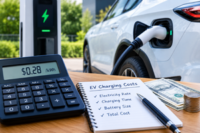
For a detailed breakdown of charging costs, see Cost to Charge an Electric Car at Home. That article focuses on the ongoing electricity cost of charging, while this section focuses on the cost of installing the charging equipment.
Why Installation Quotes Can Vary
Two homes can use the same EV charger but receive different installation estimates.
For example, one charger may be installed close to an electrical panel with a straightforward wiring route. Another may require a longer wiring run, additional electrical work, or modifications to the existing system.
For that reason, an installation quote should be based on the actual charger, electrical system, and installation location rather than a generic online price.
When Should You Hire an Electrician to Install an EV Charger?
Whether you need an electrician depends on the type of charging setup and the electrical work involved. A simple Level 1 setup may only require a suitable existing outlet, while installing a Level 2 home charger can involve a new circuit, wiring, breaker, or other electrical work.
Professional electrical help is especially important when the installation involves the home’s electrical system.
You should consider a qualified electrician when:
- A new circuit is required for the charger.
- The electrical panel needs to be assessed or modified.
- New wiring must be installed.
- The charger will be hardwired.
- The charger requires a higher electrical load.
- The installation is in a detached garage or another location far from the panel.
- Local rules require professional installation, permits, or inspection.
- You are unsure whether the existing electrical system can support the charger.
Can You Install an EV Charger Yourself?
Some charging setups involve little more than using an appropriate existing outlet, but installing a dedicated EV charging circuit or making changes to household wiring is different.
If the installation involves electrical work beyond connecting equipment to an existing suitable outlet, it is important to follow the charger’s installation instructions and applicable local electrical requirements. When in doubt, have the electrical system assessed by a qualified professional.
The key consideration is not simply whether you can physically mount the charger yourself. The important question is whether the electrical system, circuit, wiring, and charger have been correctly matched and installed.
For safety and compliance, always follow the manufacturer’s requirements and local electrical rules for your specific installation.
EV Charger Installation Checklist
Before considering a home EV charger installation complete, check that the charger, electrical connection, installation location, and vehicle work together as intended.
| Check | What to confirm |
| EV compatibility | The charger is compatible with your vehicle |
| Charger type | The selected Level 1 or Level 2 equipment meets your charging needs |
| Electrical capacity | The home’s electrical system can support the additional load |
| Circuit | The required circuit and breaker are appropriate for the charger |
| Wiring | Wiring meets the equipment and applicable electrical requirements |
| Location | The charger is positioned conveniently for the vehicle |
| Cable reach | The charging cable can reach the vehicle without creating access problems |
| Outdoor use | Equipment is suitable for the environmental conditions if installed outdoors |
| Installation instructions | Manufacturer requirements have been followed |
| Local requirements | Applicable permits, inspections, and electrical rules have been considered |
| Testing | The charging equipment operates correctly after installation |
A final check is important because EV charger installation is a complete system rather than a single piece of equipment. The charger, vehicle, electrical supply, circuit, wiring, and location should all be considered together.
If any part of the installation is uncertain, the safest approach is to consult a qualified electrical professional rather than relying on a generic installation recommendation.
Conclusion
Installing an EV charger at home involves more than choosing a charging unit. The charger, vehicle, electrical panel, circuit, wiring, installation location, and local requirements all need to work together.
For a simple charging setup, the existing electrical system may be sufficient. A higher-power Level 2 installation may require additional electrical planning and professional work. Understanding these requirements before installation can help you choose suitable equipment and avoid unexpected installation problems.
If you are still deciding how to charge your EV at home, start with our guide to How to Charge an Electric Car at Home: A Complete Beginner’s Guide.
EV Charger Installation FAQs
How long does EV charger installation take?
Installation time depends on the charger, electrical system, wiring route, and installation location. A straightforward installation can be simpler than one requiring new circuits, longer wiring, or electrical upgrades.
Does a Level 2 EV charger need a special installation?
A Level 2 charger generally requires a higher-voltage electrical connection than Level 1 charging and may require a dedicated circuit and additional electrical work. The exact requirements depend on the charger model and the home’s electrical system.
For a detailed comparison, see Level 1 vs Level 2 EV Charger: Which One Is Right for Home Charging?.
Can an EV charger be installed in a garage?
Yes, a garage can be a practical location for an EV charger. The installation should account for the electrical panel location, wiring route, vehicle parking position, cable reach, and the requirements of the selected charging equipment.
Can an EV charger be installed outside?
Some EV charging equipment is designed for outdoor installation. If installing outside, make sure the selected equipment is suitable for the environment and that the installation follows the manufacturer’s instructions and applicable local requirements.
Do I need to upgrade my electrical panel for an EV charger?
Not necessarily. Whether an upgrade is needed depends on the home’s existing electrical service, current electrical loads, and the requirements of the proposed charger. An electrical assessment can determine whether the existing system has adequate capacity.
Is EV charger installation different for every home?
Yes. The final installation can vary because homes have different electrical systems, panel locations, wiring routes, parking arrangements, and charging requirements. This is why an installation should be assessed based on the specific charger and property rather than a generic setup.



- Be Respectful
- Stay Relevant
- Stay Positive
- True Feedback
- Encourage Discussion
- Avoid Spamming
- No Fake News
- Don't Copy-Paste
- No Personal Attacks
- Be Respectful
- Stay Relevant
- Stay Positive
- True Feedback
- Encourage Discussion
- Avoid Spamming
- No Fake News
- Don't Copy-Paste
- No Personal Attacks
