Electric Car Charging Stations at Home: Complete Guide
Published: 16 Sep 2026
Charging an electric car at home is one of the most convenient ways to keep an EV ready for everyday driving. Instead of visiting a public charging station every time the battery needs energy, you can plug your electric vehicle into a home charging station and charge while it is parked, often overnight.
An electric car charging station at home is more than a cable connected to an EV. It is a complete charging setup that connects your home’s electrical system to the vehicle. Depending on the electric car, daily driving needs, available electrical capacity, and charging location, a home setup may use Level 1 or Level 2 charging.
Level 1 charging typically uses a standard 120-volt household outlet, while Level 2 charging uses 240-volt power and can provide substantially faster charging.
A typical home EV charging setup can include EV charging equipment (EVSE), a charging cable, connector, electrical circuit, circuit breaker, outlet or hardwired connection, wiring, and the home’s electrical panel. The vehicle also has an onboard charger that converts AC electricity into the DC electricity stored in the battery.
This guide explains what a home EV charging station is, how it works, the different charging levels, the equipment you need, electrical requirements, installation locations, plug-in versus hardwired connections, costs, safety considerations, and how to choose the right setup for your electric vehicle.
Yes, you can charge an electric car at home with a suitable Level 1 or Level 2 home charging station.
Level 1 charging uses a suitable 120V household outlet and provides slower charging, while Level 2 charging uses 240V power and can provide faster home charging.
The right home charging station depends on your:
- Electric vehicle’s charging capability
- Daily driving needs
- Available parking time
- Home electrical capacity
- Charging location
- Connector compatibility
- Plug-in or hardwired installation
- Budget and desired features
For many EV owners, home charging can cover most everyday driving needs, while public charging is useful for road trips or when home charging is unavailable.
Table of Contents
What Is an Electric Car Charging Station at Home?
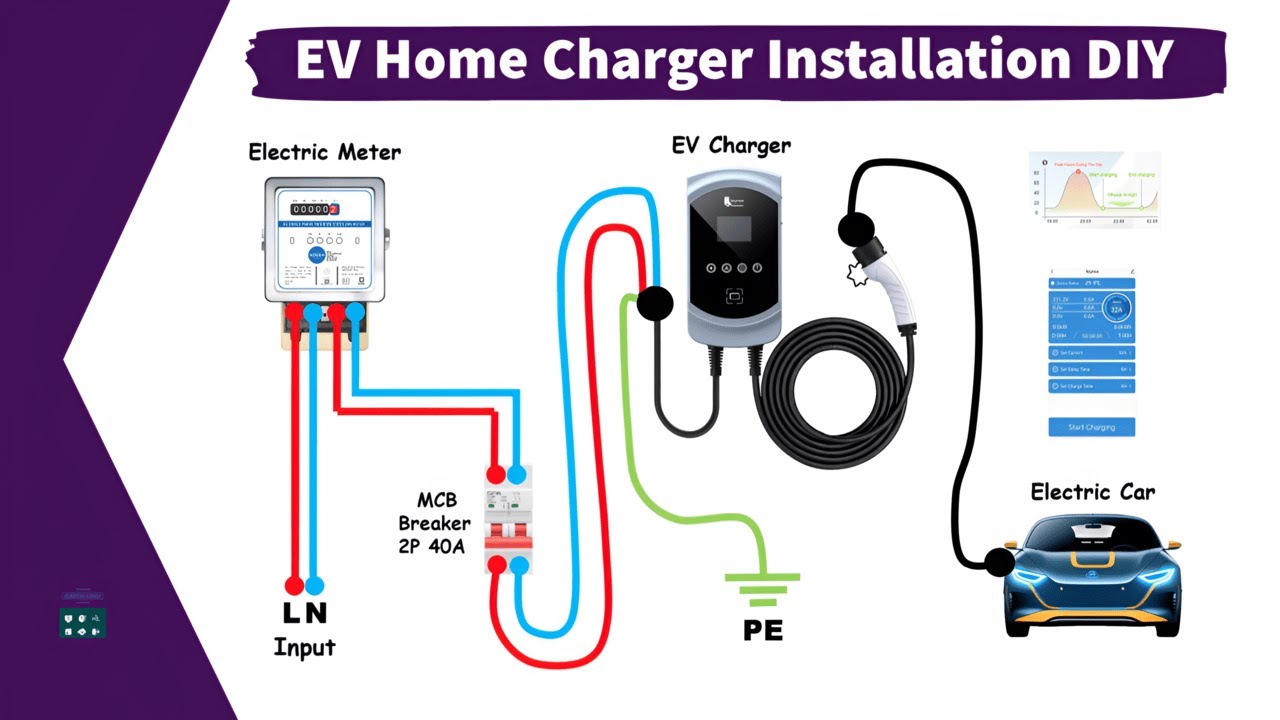
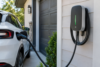
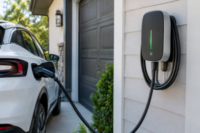
An electric car charging station at home is equipment and supporting electrical infrastructure used to transfer electricity from a home’s electrical system to an electric vehicle.
A complete home charging setup may include:
- EV charging equipment or EVSE
- Charging cable
- Charging connector
- Vehicle charging port
- Electrical outlet or hardwired connection
- Circuit breaker
- Electrical wiring
- Electrical panel
- Mounting hardware
In everyday language, terms such as EV charger, home EV charger, and home charging station are often used interchangeably. Technically, EVSE manages the electrical connection and charging process, while the vehicle’s onboard charger converts AC electricity into DC electricity that can be stored in the battery.
For residential charging, the two main charging levels are Level 1 and Level 2.
Level 1 Charging
Level 1 charging generally uses a standard 120V AC household outlet. It requires less electrical infrastructure than Level 2 and can be suitable for drivers with relatively low daily mileage or plenty of time to charge.
Level 2 Charging
Level 2 charging uses 240V AC power and can provide substantially faster charging. It is a common home-charging option for EV owners who want to add more driving range while the vehicle is parked overnight.
Your choice between Level 1 and Level 2 should be based on your vehicle, daily driving needs, available electrical capacity, and how long the vehicle normally stays at home.
How Does a Home EV Charging Station Work?
A home EV charging station transfers electrical energy from the home’s electrical system to the EV battery.
The basic electrical path is:
Electrical panel → circuit breaker → wiring → EVSE → charging cable → connector → EV charging port → onboard charger → EV battery
The process begins when electricity leaves the home’s electrical panel through the circuit supplying the charging equipment.
The EVSE manages the electrical connection between the home and the vehicle. When the connector is plugged into the vehicle’s charging port, the charging system communicates with the EV and allows charging to begin according to the equipment and vehicle requirements.
With typical residential AC charging, alternating current reaches the vehicle. The vehicle’s onboard charger converts that AC electricity into DC electricity that can be stored in the high-voltage battery.
The charging speed depends on several factors, including:
- Charging level
- Available electrical power
- EV charging capability
- Onboard charger capacity
- Charging equipment
- Battery state of charge
- Vehicle charging limits
This means installing a higher-powered home charging station does not necessarily mean the EV will charge at that maximum rate. The vehicle itself has limits on how much AC power it can accept.
For more detail about the electrical side of Level 2 charging, see our guide to Level 2 EV charger electrical requirements.
Types of Electric Car Charging Stations for Home
Most residential EV charging falls into two categories: Level 1 and Level 2.
The main difference is the electrical power available and the resulting charging speed.
Level 1 Home Charging
Level 1 charging typically uses a 120V household outlet.
It is the simplest home charging option because a suitable outlet may already exist near the vehicle’s parking location.
Level 1 can work well when:
- Daily driving mileage is relatively low
- The vehicle remains parked for many hours
- Overnight charging is sufficient
- You want to minimize additional electrical work
- Your home’s electrical system is not suited to a larger charging installation
The tradeoff is charging speed. Level 1 generally adds range more slowly than Level 2.
Level 2 Home Charging
Level 2 charging uses 240V AC power and is a common choice for residential EV charging.
It can provide faster charging than Level 1 and may be better suited to drivers who need to replenish more energy between trips.
A Level 2 home charging installation may require:
- A dedicated circuit
- Appropriate circuit protection
- Correctly sized wiring
- Suitable electrical capacity
- A compatible outlet or hardwired connection
- Professional electrical installation where required
The exact electrical requirements depend on the charging equipment and the home’s existing electrical system.
For a direct comparison, see our guide to Level 1 vs Level 2 EV chargers.
What Equipment Is Included in a Home EV Charging Station?
A home charging station is part of a larger electrical and vehicle-charging system. Different products have different designs, but several entities commonly appear in a residential setup.
EVSE and EV Charging Equipment
EVSE, or electric vehicle supply equipment, provides the controlled electrical connection between the home’s power supply and the EV.
The equipment communicates with the vehicle and manages the delivery of electricity according to the charging system’s requirements.
In everyday conversations, people often call EVSE an EV charger or home EV charger.
Charging Cable
The charging cable carries electrical power between the charging equipment and the vehicle.
Cable length matters because the cable must comfortably reach the vehicle’s charging port from the charging station without creating unnecessary tension or a trip hazard.
Charging Connector
The charging connector is the plug that connects the charging cable to the vehicle’s charging port.
Connector compatibility depends on the vehicle and charging equipment.
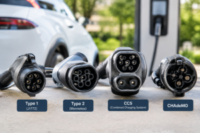
In the United States, J1772 has historically been widely used for Level 1 and Level 2 AC charging, while J3400/NACS is increasingly used by newer EVs.
The connector is an important consideration when selecting a home charging station because the charger must be compatible with the vehicle or an appropriate adapter.
EV Charging Port
The EV charging port is the vehicle-side interface where the connector plugs into the electric car.
The charging port must be compatible with the connector being used. Once connected, the vehicle and charging equipment can establish the appropriate charging connection.
Onboard Charger
The onboard charger is part of the electric vehicle rather than the wall-mounted charging equipment.
During normal AC home charging, it converts incoming AC electricity into DC electricity that the battery can store.
This distinction is useful because the home charging station and the vehicle’s onboard charger perform different functions.
Electrical Panel
The home’s electrical panel distributes electricity to the circuits throughout the property.
A Level 2 charging station may require a new circuit from the electrical panel. The panel and overall electrical service must have sufficient capacity for the planned charging load along with the home’s other electrical loads.
Learn more in our guide to what electrical panel you need for EV charging.
Circuit Breaker and Wiring
The charging circuit needs appropriate circuit protection and wiring based on the charging equipment and applicable electrical requirements.
The breaker, conductors, connections, and other electrical components must be properly selected for the charging load.
Where Can You Install an Electric Car Charging Station?
The best charging location is generally close to where you normally park your EV.
Common residential locations include:
- Garage
- Driveway
- Exterior wall
- Covered parking area
- Other suitable outdoor locations
The installation location affects cable length, wiring distance, equipment requirements, and sometimes installation cost.
Garage Charging
A garage is one of the most common locations for a home EV charging station.
A garage can provide a convenient place to mount the equipment near the vehicle while protecting the charging equipment from direct outdoor exposure.
The charging cable should still be long enough to reach the vehicle’s charging port comfortably.
Driveway Charging
A driveway can be a practical location when the vehicle is normally parked outside.
Outdoor charging equipment must be suitable for the conditions in which it will be installed. The installation should also account for cable routing, vehicle position, weather exposure, and electrical requirements.
Outdoor EV Charging
An EV charging station can be installed outdoors when the equipment and installation are appropriate for outdoor use.
Before choosing an outdoor location, consider:
- Equipment rating
- Weather exposure
- Cable reach
- Mounting surface
- Electrical panel location
- Wiring route
- Local requirements
- Vehicle parking position
A longer or more complicated electrical route can increase installation work.
What Electrical Requirements Does a Home EV Charging Station Need?
Electrical requirements depend on the charging level, charging equipment, and existing electrical system.
Level 1 Electrical Requirements
Level 1 charging typically uses a suitable 120V household outlet.
Although Level 1 may require less additional electrical work than Level 2, the outlet and circuit still need to be suitable for the intended charging equipment and electrical load.
Do not assume that any outlet is automatically appropriate for continuous EV charging.
Level 2 Electrical Requirements
Level 2 charging normally uses a 240V circuit.
The exact circuit amperage depends on the EV charging equipment and installation requirements.
For example, the EPA provides an example in which a 40-amp Level 2 charger requires a dedicated 50-amp circuit based on a 125% continuous-load calculation.
The appropriate circuit, breaker, and wiring should always be determined according to the equipment specifications and applicable electrical requirements.
Electrical Panel Capacity
Your electrical panel must have sufficient capacity to support the EV charging load together with the other loads in the home.
A larger electrical service is not automatically required for every Level 2 installation. Whether an upgrade is necessary depends on the home’s existing electrical loads and available capacity.
An electrician can perform a load calculation to determine whether the existing electrical system can safely support the proposed charging equipment.
For more information, see our guide to Level 2 EV charger electrical requirements.
Plug-In vs Hardwired EV Charging Stations
Home EV charging stations can generally be installed using a suitable plug-in connection or a hardwired electrical connection, depending on the equipment.
Plug-In EV Charging Station
A plug-in charging station connects to a compatible electrical outlet.
For Level 2 charging, a NEMA 14-50 outlet is one commonly encountered residential connection in the United States.
A plug-in installation can provide flexibility because the charging equipment may be disconnected and replaced without removing the entire electrical connection.
However, the outlet, circuit, breaker, and wiring must all be suitable for the charging equipment and its continuous electrical load.
Hardwired EV Charging Station
A hardwired charging station connects directly to the home’s electrical wiring rather than through a plug and receptacle.
Hardwiring can be appropriate for permanent installations and certain higher-powered charging equipment.
The equipment manufacturer’s instructions determine whether the charger can be plugged in or must be hardwired.
Which Should You Choose?
There is no universal answer.
A plug-in setup may be useful when flexibility or future removal is important. A hardwired installation may be appropriate when you want a permanent charging setup or when the equipment requires it.
The decision should be based on:
- Charger specifications
- Electrical capacity
- Circuit requirements
- Installation location
- Desired charging power
- Local electrical requirements
- Long-term plans
If new electrical work is required, see our guide to EV charger installation.
How Much Does a Home EV Charging Station Cost?
The total cost of a home EV charging station depends on both the equipment and the electrical installation.
A Level 1 setup may cost less when a suitable 120V outlet already exists.
A Level 2 installation can involve additional costs for:
- Charging equipment
- Electrical circuit
- Wiring
- Outlet or hardwired connection
- Electrical panel work
- Installation labor
- Permits
- Inspection
- Distance between the electrical panel and charging location
The condition and capacity of the home’s existing electrical system can have a significant effect on the installation requirements.
For a detailed explanation of installation expenses, see our guide to EV charger installation cost.
Installation cost is also different from the ongoing cost of electricity used to charge the EV.
How Much Does It Cost to Charge an Electric Car at Home?
Home EV charging is not normally free because the electricity used by the vehicle contributes to your household electricity consumption.
The ongoing charging cost depends on factors such as:
- Electricity rate
- Energy consumed by the vehicle
- Driving distance
- Vehicle efficiency
- Charging losses
- Time of charging
Some electricity providers offer time-of-use rates, where electricity costs less during certain periods.
If your utility offers time-of-use pricing, charging during lower-cost periods may reduce the amount you pay for electricity.
For the full explanation of residential charging expenses, see Cost to Charge an Electric Car at Home.
How to Choose a Home EV Charging Station
The best home EV charging station is not necessarily the fastest or most expensive model.
It should match your vehicle, charging needs, electrical system, location, and budget.
1. Check Your EV’s Charging Capability
Start with the vehicle.
Check the owner’s manual or manufacturer specifications for:
- Supported charging level
- Maximum AC charging power
- Charging connector
- Charging port
- Charging requirements
There is little benefit in buying equipment with capabilities your vehicle cannot use.
2. Choose Level 1 or Level 2
Consider how much you drive and how long the vehicle stays parked.
Level 1 may be sufficient when daily driving is relatively low and the vehicle has many hours to charge.
Level 2 may be more suitable when you drive more frequently, need faster charging, or want to replenish more energy overnight.
3. Check Electrical Capacity
Before installing Level 2 charging equipment, determine whether your home’s electrical system can support the planned charging load.
An electrician can evaluate the electrical panel, existing loads, circuit requirements, and available capacity.
4. Choose the Correct Connector
Make sure the charging connector matches your vehicle’s charging port or that a suitable adapter is supported.
Connector compatibility should be checked before purchasing the charging equipment.
5. Choose Plug-In or Hardwired
Decide whether the equipment is designed for a compatible outlet or direct hardwiring.
Your decision should follow the equipment manufacturer’s specifications and the electrical requirements of the installation.
6. Consider the Charging Location
The station should be positioned where the cable can comfortably reach the vehicle.
Think about:
- Parking position
- Cable length
- Electrical panel location
- Indoor or outdoor installation
- Wall or mounting surface
- Walking paths
- Weather exposure
7. Consider Smart Charging Features
Some home charging stations offer features such as:
- Wi-Fi connectivity
- Smartphone controls
- Charging schedules
- Energy monitoring
- Remote status monitoring
These features can be useful, but they are optional for many homeowners.
Start with the fundamental requirements: compatibility, charging level, electrical capacity, location, and safe installation.
8. Think About Future Charging Needs
Your needs may change if you:
- Drive more miles
- Purchase another EV
- Change your parking arrangement
- Add other electrical loads to your home
Choosing equipment that meets your current needs while allowing reasonable future flexibility can make the charging installation more useful over time.
Home EV Charging Station Safety
A properly installed home EV charging station can provide convenient everyday charging, but the electrical equipment should be installed and used correctly.
Follow these basic safety practices:
- Use charging equipment compatible with your EV.
- Follow the manufacturer’s installation instructions.
- Use an appropriately sized circuit and circuit protection.
- Do not use damaged cables, plugs, or connectors.
- Avoid unsuitable extension cords or power strips.
- Keep charging cables away from walking paths.
- Use equipment rated for outdoor conditions when charging outside.
- Keep electrical connections protected as required.
- Have new electrical circuits installed by a qualified electrician.
- Follow applicable electrical codes, permits, and inspection requirements.
Inspect the charging cable and connector periodically for visible damage. If equipment is damaged, stop using it until it has been properly evaluated or replaced.
Home EV Charging Station vs Public Charging Station
Home and public charging stations serve different purposes.
| Feature | Home EV Charging | Public EV Charging |
| Primary use | Daily charging | Travel and charging away from home |
| Typical location | Garage, driveway, home parking area | Parking lots, businesses, highways |
| Common charging | Level 1 and Level 2 | Level 2 and DC fast charging |
| Payment | Home electricity bill | May require payment |
| Convenience | Charge while parked at home | Requires traveling to a charging location |
| Installation | Home electrical installation | Installed by site owner or charging provider |
| Charging speed | Usually Level 1 or Level 2 | Can include high-power DC fast charging |
For everyday driving, home charging can be convenient because the vehicle can charge while parked overnight or during other long parking periods.
Public charging becomes particularly useful during road trips, longer journeys, or when home charging is unavailable.
The two systems therefore complement each other rather than replacing one another.
Frequently Asked Questions
Can You Have an Electric Car Charging Station at Home?
Yes. An electric car can be charged at home using a suitable Level 1 or Level 2 charging setup.
The appropriate option depends on the vehicle, daily driving needs, parking location, and available electrical capacity.
What Is an Electric Car Charging Station at Home?
It is a home charging setup that connects the property’s electrical system to an electric vehicle.
It may include EVSE, a charging cable, connector, electrical circuit, breaker, wiring, outlet or hardwired connection, and other installation components.
Is Level 2 Better Than Level 1 for Home Charging?
Not necessarily.
Level 1 can be sufficient for drivers with lower daily mileage and plenty of charging time.
Level 2 provides faster charging and may be more convenient for drivers who need to add more energy during the time the vehicle is parked.
Do You Need a Special Outlet for an EV Charger?
Not always.
Level 1 charging can use a suitable 120V household outlet.
A Level 2 charging station may use a compatible 240V outlet, such as a NEMA 14-50, or may be hardwired.
The required connection depends on the equipment and installation.
Can an EV Charging Station Be Installed Outside?
Yes, provided the charging equipment is suitable for outdoor use and the installation follows the manufacturer’s instructions and applicable electrical requirements.
Do You Need a 200-Amp Electrical Panel for an EV Charger?
Not automatically.
The required electrical capacity depends on the home’s existing electrical loads and the proposed charging equipment.
An electrical load calculation can determine whether the existing electrical service can support the charging load or whether changes are needed.
How Much Electricity Does a Home EV Charger Use?
Electricity consumption depends primarily on how much energy the vehicle requires.
Driving distance, vehicle efficiency, battery charging needs, and charging losses can all affect electricity consumption.
Is Home EV Charging Cheaper Than Public Charging?
The answer depends on the electricity rate at home and the pricing structure of the public charging station.
Home charging commonly uses the household electricity rate, while public charging may use per-kWh pricing, time-based pricing, session fees, subscriptions, or other pricing models.
Can You Charge an EV Every Night at Home?
Yes. Many EV owners use home charging as part of their regular routine, plugging in when they return home and charging during the time the vehicle is parked.
The appropriate charging schedule depends on the vehicle, electricity rate, daily driving requirements, and charging equipment.
Final Takeaway
An electric car charging station at home provides a convenient way to charge an EV where it is normally parked.
A complete home charging setup can include EVSE, a charging cable, connector, charging port, electrical circuit, breaker, wiring, electrical panel, and either an outlet or hardwired connection.
For most residential applications, the main charging choice is between Level 1 and Level 2. Level 1 uses a suitable 120V outlet and provides slower charging, while Level 2 uses 240V power and can provide faster charging.
Before installing a home charging station, consider your:
- Electric vehicle
- Charging level
- Daily driving distance
- Charging time available
- Connector
- Electrical capacity
- Charging location
- Cable length
- Plug-in or hardwired configuration
- Installation requirements
- Budget
You do not necessarily need the most powerful charging station. The best setup is the one that safely matches your vehicle, electrical system, parking location, and everyday charging needs.
With compatible equipment and proper installation, home EV charging can become a simple and convenient part of everyday electric vehicle ownership.



- Be Respectful
- Stay Relevant
- Stay Positive
- True Feedback
- Encourage Discussion
- Avoid Spamming
- No Fake News
- Don't Copy-Paste
- No Personal Attacks
- Be Respectful
- Stay Relevant
- Stay Positive
- True Feedback
- Encourage Discussion
- Avoid Spamming
- No Fake News
- Don't Copy-Paste
- No Personal Attacks
